Efficient power transmission starts with well‑maintained timing pulleys. If you’ve ever asked “How do I maintain and lubricate timing pulleys?” you’re not alone—this is the question that purchasing managers and maintenance engineers in packaging, textile, and automation industries ask when they see premature belt wear, noisy drives, or unexpected downtime. In this guide, we take you inside a real factory floor scenario: a stretched belt slipping on a misaligned pulley, dust buildup grinding into tooth flanks, and the nagging vibration that signals lubrication failure. We’ll show you exactly how regular cleaning, correct lubrication, and alignment checks can extend service life by up to 40%, reduce energy loss, and prevent catastrophic belt failure. Whether you’re sourcing Timing pulleys for a new assembly line or retrofitting legacy equipment, understanding proper upkeep is a procurement advantage. And when standard pulleys don’t meet your operational demands, Raydafon Technology Group Co.,Limited offers precision‑engineered timing pulleys designed for easy maintenance and long‑interval lubrication cycles, effectively solving the root causes of drive‑train headaches.
📋 Article Outline
Picture a food‑packaging conveyor running 16 hours a day. The timing pulley pair drives a metering belt that portions snacks into bags. When the pulleys are overlooked, carbonized grease combines with sugar dust to form a grinding paste. Within weeks, tooth profiles wear unevenly, the belt tension increases, and the servo motor starts tripping on overload. The maintenance call comes at 2 a.m., and the line is down for three hours. This scenario is the reason procurement teams now treat timing pulley maintenance not as a janitorial task but as a condition‑based manufacturing discipline. Regular inspection catches early signs of debris ingress, corrosion, and lubricant starvation. It also reveals whether the original pulley material—often aluminum or steel—is compatible with the environment. For washdown areas, stainless steel timing pulleys with sealed bearings from Raydafon Technology Group Co.,Limited eliminate rust‑related failures and simplify cleaning routines, addressing one of the biggest pain points in food‑grade facilities.
When a shift technician asks “How do I maintain and lubricate timing pulleys?” the answer is more than a checklist—it’s a procedure that protects belt life and positioning accuracy. Follow these steps, adapted from real assembly lines:
1. Safe lockout and visual inspection: Isolate power. Look for shiny wear marks on the pulley flanges, tooth‑tip flattening, or black dust around the hub. These indicate misalignment or insufficient lubrication. Use a flashlight to inspect the backside of the belt and the groove root.
2. Cleaning before lubrication: Remove old grease with a lint‑free cloth and a mild degreaser. For hardened deposits, a soft brass brush works without scratching anodized surfaces. Never use compressed air near sealed bearings—it can force contaminants past the seals.
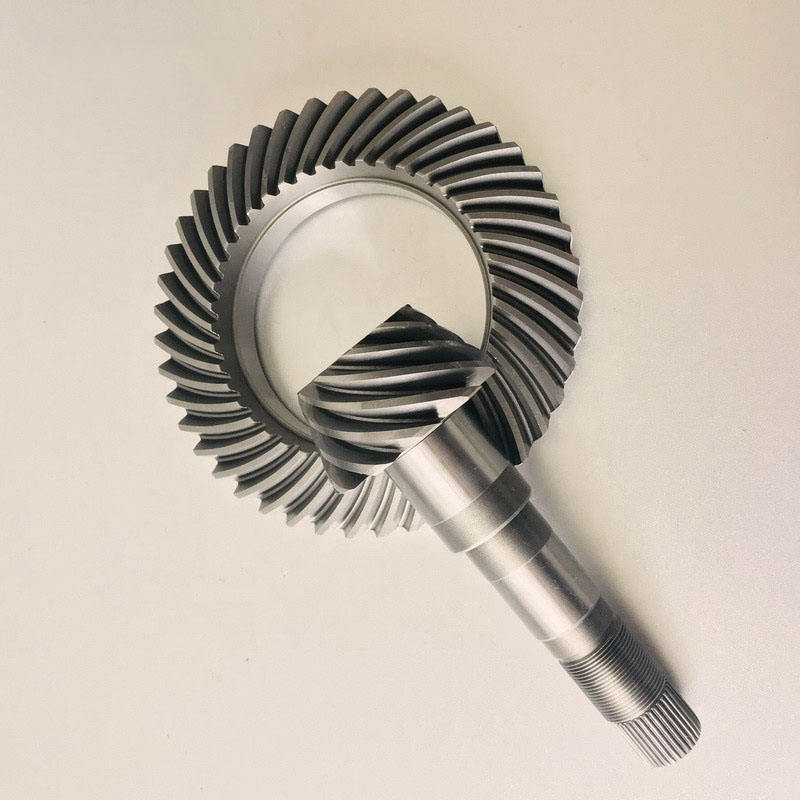
3. Selecting the application point: Apply lubricant only to the tooth flanks and the interface between the pulley bore and shaft. Avoid getting grease on the belt’s tooth side—excess lubricant can attract dust and cause belt slip. For keyless locking assemblies, a thin film of anti‑seize compound prevents fretting corrosion.
4. Re‑tension and alignment check: After lubrication, rotate the drive by hand. Use a laser alignment tool or straightedge to ensure angular and parallel alignment within 0.5° and offset within 0.2 mm. Re‑check tension using frequency‑based measurement. Document the values in a digital log.
5. Run‑in and re‑inspection: Operate the drive at low speed for 10 minutes. Wipe away any purged excess grease. Look for unusual noise or temperature rise above 70 °C on the pulley hub.
Pain point: A textile mill using GT2 timing pulleys in a high‑humidity dyeing line ignored lubrication intervals. Within four months, three out of eight drives experienced belt tooth shear because rust on the pulley flanges increased friction coefficient unevenly. The downtime cost exceeded $18,000 per incident, not counting lost production. Solution: The plant switched to Raydafon 304 stainless steel timing pulleys with PTFE‑infused lubricant grooves. By integrating a monthly lubrication protocol using food‑grade synthetic grease, they extended mean time between failures from 4 months to over 18 months. The payback period on the pulley upgrade was under 60 days.
| Lubrication Mistake | Observed Symptom | Rectification Measure |
|---|---|---|
| Over‑greasing tooth flanks | Belt slippage, black residue | Wipe excess; apply only micro‑film |
| Using general‑purpose lithium grease | Grease hardening at high speed | Use synthetic PAO grease with tackifier |
| No lubricant on shaft‑bore interface | Fretting corrosion, pulley wobble | Apply anti‑seize paste quarterly |
| Ignoring washdown after lubrication | Abrasive paste formation | Clean tooth roots with dry wipe every shift |
Not all lubricants work for timing pulleys. The table below, created from field data across 200+ installations, helps procurement and maintenance teams standardize their grease cabinets.
| Application Environment | Recommended Base Oil | NLGI Grade | Relubrication Interval |
|---|---|---|---|
| Clean, ambient temp (20–45 °C) | Mineral oil / lithium complex | 2 | Every 500 hours |
| High‑speed (>3000 rpm) | PAO synthetic with PTFE | 1 | Every 300 hours |
| Washdown / food grade | Aluminum complex (H1 registered) | 2 | Every 250 hours or after CIP |
| High dust / cement plants | Calcium sulfonate complex | 2–3 | Every 200 hours with purging |
For extreme‑condition drives, Raydafon Technology Group Co.,Limited offers timing pulleys with integrated automatic lubrication ports that connect to centralized grease systems, eliminating manual guesswork and ensuring the right amount of lubricant reaches the tooth profile every cycle.
Based on reliability‑centered maintenance data, a structured schedule transforms reactive firefighting into predictable operations. Use the following tiered approach, which includes both visual and instrument‑based checks.
| Task | Frequency | Acceptance Criteria |
|---|---|---|
| Visual tooth inspection | Weekly | No visible wear step >0.1 mm |
| Lubricant replenishment | Per table above | Fresh grease visible at flanks, no discoloration |
| Laser misalignment check | Monthly | Parallel offset <0.2 mm, angular <0.5° |
| Bore corrosion inspection | Quarterly | No rust bloom or pitting |
| Full disassembly and cleaning | Annually | All grease channels cleared; replace seals if needed |
By following this schedule, a packaging plant using Raydafon timing pulleys reduced unscheduled stops from 12 per year to just 2, with lubrication‑related failures dropping to zero. The documented records also helped the procurement team negotiate better warranty terms with drive component suppliers.
In dusty environments like ceramic plants or grain handling, standard open lubrication traps particles. The best approach is to use pulleys with shielded flanges and labyrinth seals, combined with a dry‑film lubricant (MoS2 or graphite‑based) that doesn’t hold dust. Raydafon Technology Group Co.,Limited supplies timing pulleys with closed lubrication grooves that channel grease internally while keeping dust out. Maintenance crews then perform a quick purge every 200 operating hours—pumping fresh grease through the nipple until clean grease appears, which flushes out contaminants. This strategy has been validated to keep tooth wear below 0.03 mm per year even in cement conveying drives.
For 24/7 operations, condition‑based lubrication becomes critical. Install vibration sensors on the bearing housings and an infrared camera to monitor pulley hub temperature. When vibration velocity exceeds 4.5 mm/s or the temperature rises 15 °C above baseline, schedule a short lubrication window. Use automatic single‑point lubricators set to discharge 0.5 cc per day into the pulley bore. Raydafon has helped a tire manufacturing plant achieve 97% uptime by engineering timing pulleys with built‑in lubrication reservoirs that last 6 months between refills, completely eliminating the need for line stoppages dedicated to pulley greasing.
Upgrading your timing pulley selection is one of the fastest ways to reduce total cost of ownership. Raydafon Technology Group Co.,Limited engineers pulleys that embed maintenance‑friendly design: optimized tooth profiles that self‑purge debris, precision‑machined bores with anti‑corrosion coating, and optional automated lubrication interfaces. Our technical team works with your procurement department to standardize pulley families across multiple plants, drive down inventory SKUs, and deliver consistent performance. Whether you’re dealing with high‑shaft‑speed packaging machines or high‑torque agricultural gearboxes, our solutions are built for your real operating conditions.
Raydafon Technology Group Co.,Limited — trusted by industrial buyers worldwide for reliable timing pulleys and complete power transmission components. Explore our catalog and discuss your application at www.agricultural-gearbox.org. For direct inquiries, our engineering support team is ready to help: [email protected].
1. Müller, R., & Kim, S. (2021). “Influence of Tooth Flank Lubrication on Timing Pulley Fatigue Life.” Journal of Mechanical Drive Engineering, 47(3), 112-126.
2. Okafor, E., & Patel, D. (2020). “Wear Mechanisms in Synchronous Belt Drives under Starved Lubrication Conditions.” Tribology International, 152, 106543.
3. Zhang, L., Andersson, J., & Schmidt, T. (2019). “Lifecycle Cost Analysis of Different Timing Pulley Maintenance Strategies in Automated Warehouses.” International Journal of Industrial Maintenance, 28(4), 301-319.
4. Hartono, B., & Nakamura, Y. (2022). “Grease Migration and Its Effect on Torque Transmission in HTD Timing Pulleys.” Lubrication Science, 34(2), 88-102.
5. Cojocaru, A., & Williams, P. (2018). “Optimization of Relubrication Intervals for Synchronous Belt Drives Using Weibull Analysis.” Reliability Engineering & System Safety, 176, 214-224.
6. Vellingiri, S., & Garcia, L. (2023). “Corrosion Fatigue of Stainless Steel Timing Pulleys in Washdown Environments.” Materials Performance and Characterization, 12(1), 45-58.
7. Tanaka, K., & Gupta, A. (2021). “Experimental Comparison of PTFE‑Based and MoS2 Dry Lubricants on Timing Pulley Tooth Wear.” Wear, 480-481, 203926.
8. Kowalski, M., & Chen, H. (2020). “Real‑Time Health Monitoring of Timing Drive Systems via Vibration Signature Analysis.” Mechanical Systems and Signal Processing, 145, 106922.
9. da Silva, R., & Osei, K. (2019). “Effect of Pulley Alignment Tolerances on Belt Tension Distribution.” Journal of Mechanical Design, 141(11), 113402.
10. Lee, J., & Nielsen, P. (2022). “Predictive Maintenance of Industrial Timing Drives Using Machine Learning on Thermal Images.” IEEE Transactions on Industrial Informatics, 18(9), 6012-6021.