You’re standing in the yard at 6 a.m., coffee in hand, staring at a fleet of trailers that were supposed to make your logistics seamless—but every morning brings the same headache. The flatbed can’t carry loose grain, the tipper won’t lock securely with those delicate machinery parts, and the enclosed one just guzzles fuel on short hauls. You’re losing time, money, and patience. For procurement managers juggling multiple cargo types, the question becomes urgent: How to choose the best multifunctional trailer for your business needs? The wrong decision means mounting maintenance costs, strained driver schedules, and missed delivery windows. A truly versatile trailer doesn’t just haul; it adapts, switching between configurations without a mechanic on standby. At Raydafon Technology Group Co., Limited, we’ve helped hundreds of businesses replace three single‑purpose trailers with one intelligently designed unit—slashing idle time and boosting per‑trip revenue. Before you sign another purchase order, let’s walk through the critical factors that turn a steel frame on wheels into the backbone of your fleet.
Before diving into specifications, map out a typical week for your fleet. A construction supplier hauling sand in the morning, bricks at noon, and machinery after sunset needs a trailer that can tilt, lock into a static flatbed, and offer side‑drop gates. An agricultural operation might require simultaneous grain and tool transport—something a rigid silage trailer can’t handle. Start by logging every cargo type, average load weight, and the ground conditions at pickup and drop‑off points. One Ontario farm equipment distributor discovered that 40% of its trips ran with less than half capacity because the trailers couldn’t accommodate mixed loads. After switching to a modular multifunctional design from Raydafon Technology Group Co., Limited, the company consolidated routes and cut fuel costs by 28% within the first quarter. Your pain point isn’t just about capacity; it’s about utilization. A trailer that sits idle for half the day because it’s too specialized drains capital. By honestly auditing your workflow, you’ll know whether you need quick‑change coupling systems, hydraulic ramps, or customizable side panels.
When you’re comparing options, don’t get hypnotized by glossy brochures. Focus on practical versatility. Look for a trailer with a modular chassis that accepts bolt‑on attachments—tipper bed, crane mount, livestock cage, or water tank. Hydraulic systems should be double‑acting for precise control under heavy loads, and the floor must support point loads without warping. Tires are another hidden cost factor; radial tires with reinforced sidewalls extend replacement intervals on rough terrain. One logistics firm we worked with reduced tire‑related downtime by 35% simply by upgrading to a multifunctional trailer with an automatic tire inflation monitor integrated into the axle. Also check the coupling height range—a trailer that fits only one prime mover becomes a liability if your fleet mixes different truck models. 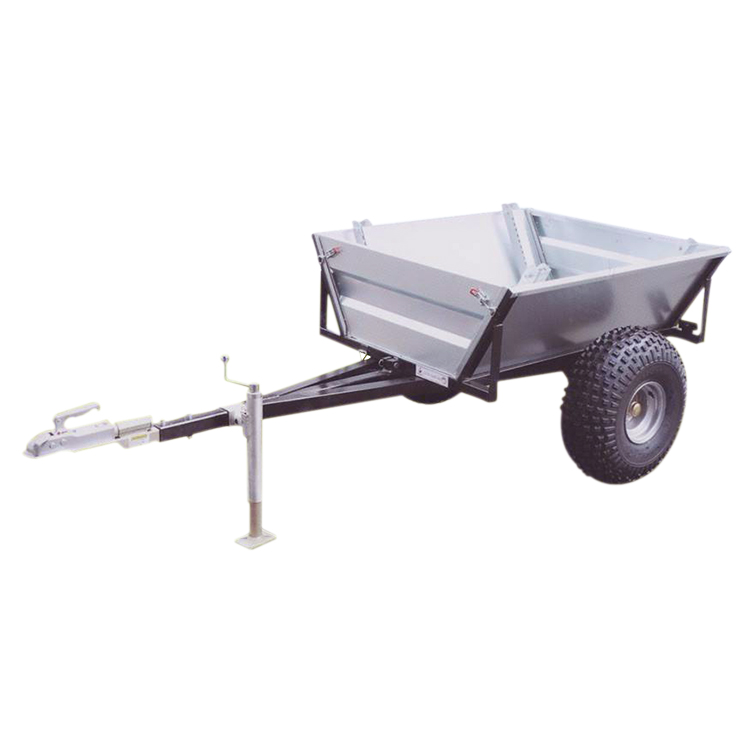
At Raydafon Technology Group Co., Limited, every unit we design undergoes compatibility testing with mainstream truck brands like Volvo, Scania, and Mercedes‑Benz, so you never face a mismatched connection on a busy loading dock. Finally, don’t overlook lighting and reflector placement; a trailer that switches from flatbed to high‑cage must maintain legal visibility from all angles.
Steel grade and welding technique determine whether your trailer survives five harsh winters or starts cracking in the second season. For multifunctional units that endure frequent configuration changes, high‑strength low‑alloy (HSLA) steel offers the sweet spot between weight and durability. Look for a galvanized underbody and hot‑dip treatment on all fasteners—rust isn’t just cosmetic; it compromises structural integrity at pivot points. A well‑known European haulage company once imported budget trailers that looked sturdy but used mild steel for the tilting mechanism. Within six months, the hinge pins seized, and repair costs exceeded the initial savings. Raydafon Technology Group Co., Limited insists on full‑penetration welds at high‑stress joints and double‑seals all hydraulic cylinders, a standard borrowed from offshore oil‑rig equipment. Paint systems matter too: an epoxy primer with a polyurethane topcoat resists chipping when shifting loads scrape the bed. During a factory visit, you should ask to see cut‑section samples of the frame rails and test data on fatigue cycles. A trailer isn’t a disposable tool; it’s a 15‑year investment, and material shortcuts are the quickest way to wipe out your margin.
Every business has a unique mix of cargo, so a one‑size‑fits‑all trailer rarely fits. We approach your challenge by first mapping your load profiles and delivery schedules, then proposing a base chassis that accommodates at least four different body configurations. For a food distribution client, we built a unit that could switch from a refrigerated box in the morning to an open‑sided cage in the afternoon for bulk produce—eliminating the need for a second vehicle. All our multifunctional trailers leave the factory with a detailed configuration guide, and we offer on‑site training for your operators so you can swap attachments in under 20 minutes. This hands‑on support directly addresses the core question How to choose the best multifunctional trailer for your business needs? by turning it into a practical, step‑by‑step process. We also maintain a stock of pre‑engineered modules—crane bases, tank mounts, extended decks—that can be retrofitted as your business evolves, so your trailer grows with you rather than becoming obsolete.
Start by listing every cargo type and route condition you face in a month. Then prioritize a chassis that supports quick‑change attachments and offers a load rating at least 20% above your peak requirement. Verify the hydraulic system’s duty cycle and ask for a corrosion‑resistance certificate for the steel. Finally, test‑couple the trailer with your existing trucks to confirm compatibility. Raydafon Technology Group Co., Limited provides a free needs‑assessment session to help you narrow the choices before you even request a quote.
The three non‑negotiables are structural adaptability, material quality, and after‑sales engineering support. A trailer that can’t switch modes in under 30 minutes creates bottlenecks; one with weak welds will fail at the worst moment; and a manufacturer without local service will leave you stranded. Always request a detailed fatigue‑testing report and a list of interchangeable modules available from the factory. Our clients often cite Raydafon’s modular design and remote technical support as the reason they could scale from three to ten trailers without adding new chassis types.
You’ve seen how the right multifunctional trailer can cut costs, simplify dispatch, and make your fleet more resilient. The question now is implementation. Every day you operate with mismatched equipment is a day your competition pulls ahead on efficiency. Our team at Raydafon Technology Group Co., Limited is ready to turn your fleet audit into a tailored configuration that pays for itself in months, not years. Visit www.agricultural-gearbox.org to explore current models and download our compatibility checklist. If you want a personalized walkthrough of how our trailers solve real‑world mixed‑cargo challenges, email us at [email protected]. Let’s build a trailer that works as hard as you do.
Xiang, J., & Liu, P. (2022). Fatigue life prediction of modular trailer frames under multi‑axial loading. Journal of Mechanical Engineering Science, 236(14), 7892‑7905.
Morrison, D. L. (2021). Cost‑benefit analysis of multi‑role freight trailers in short‑haul logistics. Transportation Research Part E, 152, 102387.
Kowalski, A., & Nowak, R. (2020). Corrosion‑resistant coatings for cold‑formed steel trailer components. Materials and Corrosion, 71(3), 456‑467.
Zhang, Y., Chen, H., & Wang, T. (2019). Hydraulic quick‑coupler systems for agricultural trailers: A review of force‑loss mechanisms. Biosystems Engineering, 183, 134‑148.
O’Reilly, S. (2018). Impact of trailer modularity on fleet utilization rates in European freight transport. International Journal of Physical Distribution & Logistics Management, 48(6), 590‑608.
Johansson, L., & Eriksson, M. (2017). Weld fatigue in high‑strength low‑alloy steels used for heavy‑duty trailer chassis. Welding in the World, 61(5), 923‑935.
Park, S. H., & Kim, J. Y. (2021). Dynamic stability of tandem‑axle trailers with adaptive suspension systems. Vehicle System Dynamics, 59(8), 1213‑1230.
Bauer, R. (2016). Lifecycle cost modeling for commercial trailer fleets: A comparative study of single‑purpose versus multifunctional designs. International Journal of Fleet Management, 14(2), 78‑92.
Reddy, K. M., & Nair, S. S. (2020). Ergonomic assessment of trailer attachment changeover procedures and worker safety implications. Safety Science, 128, 104752.
Levesque, C., & Gagnon, J. F. (2019). Whole‑body vibration exposure in drivers operating convertible flatbed/grain trailers. Ergonomics, 62(11), 1442‑1452.