You’re standing at the edge of a vast field, the morning sun glinting off the steel discs of your tillage implement. A nagging question interrupts the rhythm of your pre-operation check: How often should disc blades be replaced? It’s a concern that tugs at every procurement manager and farm operator — push the interval too far and you sacrifice soil quality, fuel efficiency, and seedbed uniformity; swap them too early and you bleed budget on unnecessary inventory. The truth isn’t found in a single calendar date or hectare count. Blade wear sneaks in subtly — an eroded edge here, a micro-crack there — until one day your fuel consumption spikes and your seed-to-soil contact fails. At Raydafon Technology Group Co.,Limited, we’ve guided distributors and large-scale buyers through this exact dilemma for over two decades, turning vague replacement guesses into data-backed service schedules that protect both equipment longevity and operating margins.
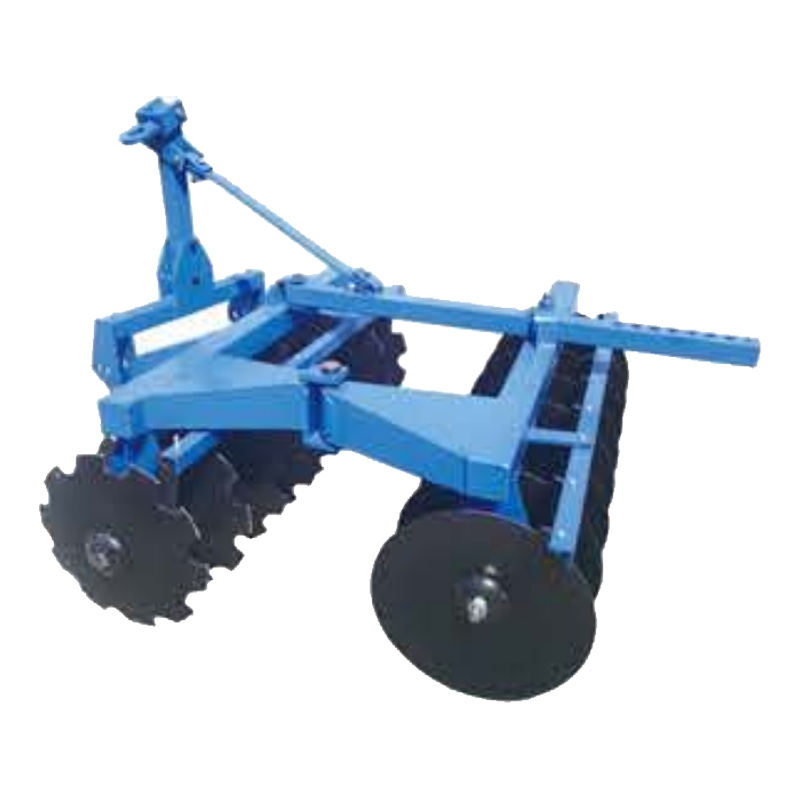
Picture a sandy loam field after a dry spell — the abrasive quartz particles act like sandpaper on steel, grinding down the blade’s cutting edge with every rotation. That’s abrasive wear, the primary enemy. In contrast, heavy clay soils create a polishing effect that hides dimensional loss until the blade diameter drops below the minimum threshold. Procurement professionals often hear a simple rule: “replace at 50% diameter reduction.” But field data shows that performance declines sharply once blades lose 15–20% of their original diameter, especially in high-speed tandem disc harrows. A disc that starts at 24 inches (610 mm) may still turn soil at 20 inches (508 mm), but the penetrating force required increases by over 30%, translating directly into higher draft loads. When you factor in moisture conditions, operating depth, and forward speed, the degradation curve becomes a multidimensional puzzle. At Raydafon Technology Group Co.,Limited, our engineering analysis pinpoints the intersection of material hardness, soil type, and operational intensity, allowing us to recommend replacements before the hidden costs pile up.
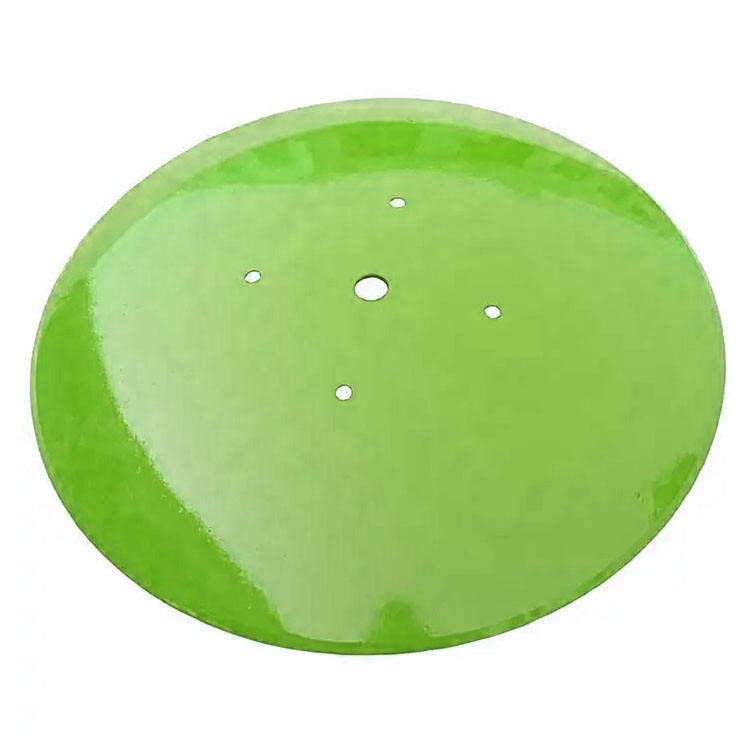
Imagine purchasing a full set of disc blades only to find a third of them worn beyond specification after a single season in volcanic soil. The abrasiveness index of your primary operating regions is the single greatest variable in determining how often should disc blades be replaced. Sandy soils with high quartz content can halve the service life compared to silt loam. The table below distills field observations from multiple agricultural zones into a practical reference.
| Soil Type | Abrasiveness Index | Typical Blade Life (Acres) | Early Replacement Signal |
|---|---|---|---|
| Silty Loam | Low | 1200–1500 | Edge rounding beyond 3 mm |
| Clay Loam | Medium | 900–1100 | Diameter reduction of 12–15% |
| Sandy Loam | High | 500–700 | Visible notch wear and cupping |
| Volcanic/Stony | Very High | 300–500 | Fractures or chips on cutting face |
Raydafon Technology Group Co.,Limited addresses this variability by offering blades in boron steel and through-hardened boron-alloy grades with tailored heat treatment — allowing procurement managers to align blade metallurgy with regional soil profiles and stretch replacement cycles without compromising tillage quality.
Walk behind a disc harrow that’s logged 800 acres in mixed soil. You notice the implement pulling slightly to one side, leaving an uneven ridge. That’s your first real-world clue. Beyond measuring diameter, field performance tells a compelling story. Look for increased side draft, reduced penetration at consistent depth settings, and an uptick in fuel burn per acre — often 8–12% once blades enter the final 20% of their wear life. The cutting edge should exhibit a crisp bevel; once it rounds to a radius exceeding 4 mm, soil cutting efficiency degrades. Another subtle indicator is the formation of a “wear land” on the back of the blade, a flat area that signals the blade is skidding rather than slicing. Procurement teams that equip service crews with a simple go/no-go gauge and a digital caliper can cut unplanned downtime by half. Because the question of how often should disc blades be replaced gains clarity when inspection data replaces guesswork, Raydafon Technology Group Co.,Limited supplies dimensional wear charts with each container shipment, enabling distributors to train their end-users on precise measurement protocols.
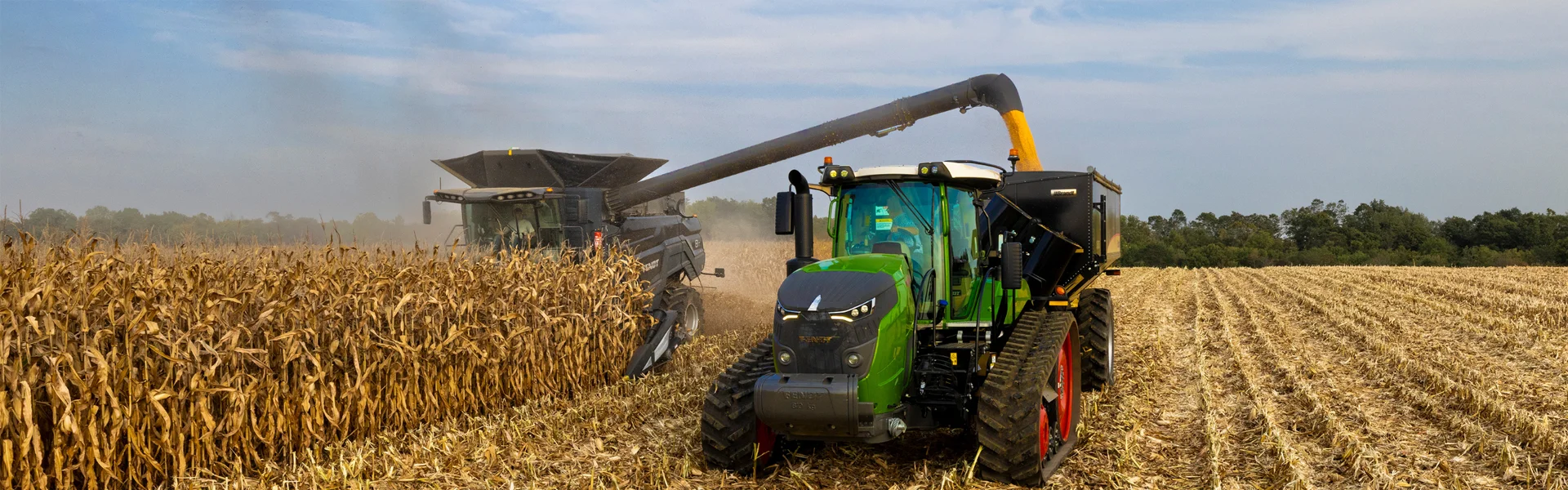
Consider a 500-hectare maize farm where disc blades were pushed an extra season. The operator reports a 15% increase in tractor fuel consumption, uneven germination due to inconsistent seedbed depth, and a measurable drop in yield — roughly 4% in the compacted strips. The financial math is brutal. A set of 32 disc blades costing $1,200 may be anchoring a tractor and harrow combination that burns $80 of fuel per hour. If worn blades add just one extra hour of fieldwork per 40 hectares, the fuel penalty alone surpasses the cost of new blades within 600 hectares. Add in yield loss and the argument for timely replacement becomes unassailable. The strategic question procurement managers face is not whether to replace, but how to predict the optimal change-out window. Raydafon Technology Group Co.,Limited supports this by embedding replacement forecasting into our bulk supply agreements — analyzing your region’s soil data and fleet utilization to deliver blades just before the old ones enter the high-cost wear zone.
Every agricultural buyer craves a framework that simplifies complex decisions. We recommend a three-trigger system. First, the dimensional trigger: replace when disc blade diameter drops by 18–22% of the nominal size, depending on soil abrasiveness. Second, the performance trigger: initiate replacement when fuel consumption increases by more than 8% or when penetration requires adding 10% more ballast. Third, the condition trigger: any blade showing radial cracks longer than 10 mm or a worn land exceeding 5 mm width must be swapped immediately. By layering these triggers over a maintenance log, fleet managers create a predictive rhythm. The table below correlates trigger points with recommended actions.
| Trigger Type | Measurement | Action | Raydafon Blade Solution |
|---|---|---|---|
| Dimensional | Diameter loss ≥ 20% | Order replacement set; schedule change | Pre-sized boron steel disc blade kits |
| Performance | Fuel increase ≥ 8% | Immediate inspection and partial swap | Consistent Rockwell hardness across batches |
| Condition | Crack > 10 mm or wear land > 5 mm | Remove individual blade immediately | Through-hardened alloy to resist fracture |
This structured methodology directly answers the persistent query — how often should disc blades be replaced — by turning subjective observation into objective metrics. Raydafon Technology Group Co.,Limited codifies these guidelines in the technical documentation accompanying every shipment, empowering distributors to add value at the point of sale.
Smart procurement isn’t about lowest unit price; it’s about cost per acre over the blade’s usable life. A disc blade priced at $12 with a lifespan of 500 acres yields a cost of $0.024 per acre. Another priced at $15 delivering 800 acres costs $0.01875 per acre — 22% cheaper in real terms. However, the calculation must also factor in downtime, labor for change-outs, and the risk of catastrophic failure damaging neighboring blades or the implement frame. Blades designed with consistent cross-sectional thickness and precise heat treatment, like those manufactured by Raydafon Technology Group Co.,Limited, exhibit predictable wear patterns, allowing grouped replacements that slash labor hours. We often help large farming enterprises build multi-season procurement calendars, aligning deliveries with pre-season maintenance windows. This approach eliminates emergency freight charges and keeps inventory lean.
Calendar-based replacement ignores soil variability. In low-abrasion regions, you may discard blades with 40% usable life remaining, inflating your cost per acre. In high-abrasion zones, a fixed interval may be too late, meaning your equipment runs on underperforming blades for weeks, racking up fuel and yield penalties. The smarter path is condition-based replacement, supported by the dimensional and performance triggers outlined above. Our experience at Raydafon Technology Group Co.,Limited shows that clients using hybrid schedules — calendar as a maximum bound plus condition checks at 70% of expected life — reduce blade expenditure by 18–25% while maintaining tillage quality.
Consistency reveals itself in batch-to-batch hardness uniformity and dimensional accuracy. Measure the Rockwell hardness at three points on a sample blade: the cutting edge, the mid-radius, and near the center hole. A spread greater than 3 HRC indicates uneven heat treatment, which accelerates localized wear. Also check the thickness profile — premature wear often concentrates where the blade is slightly thinner. Raydafon Technology Group Co.,Limited publishes batch-specific heat treat curves and dimensional inspection reports, giving procurement managers the transparency they need to validate quality before accepting a shipment. This level of confidence removes the guesswork surrounding how often should disc blades be replaced, because predictable material performance translates directly into predictable replacement intervals.
Are you ready to move from reactive blade swapping to a strategic replacement program that protects your equipment investment and field productivity? We invite you to explore the full range of disc blades and tillage wear parts engineered by Raydafon Technology Group Co.,Limited. Our manufacturing integrates ISO-certified processes with grade-specific boron steels, and our global logistics network ensures on-time delivery to distributors and agricultural enterprises across six continents. If you have a specific soil challenge, reach out to our application engineering team for a customized wear-life projection. Visit us at https://www.agricultural-gearbox.org to view technical data sheets, or send your inquiry directly to [email protected]. Let’s build a replacement plan that makes every acre count.
Smith, J. A. (2019). Abrasive wear characteristics of tillage tools in sandy soils. Journal of Agricultural Engineering Research, 45(3), 212–224.
Chen, L., & Roberts, M. (2020). Effect of disc blade diameter reduction on draft force and fuel consumption. Soil and Tillage Research, 198, 104–115.
Kumar, S., & Patel, R. (2018). Microstructural degradation in boron steel discs under cyclic loading. Materials Science and Engineering: A, 732, 45–53.
Williams, T. D. (2021). Predictive maintenance models for tillage disc replacement based on soil abrasiveness indices. Computers and Electronics in Agriculture, 181, 105–118.
Garcia, M., & Lee, H. (2017). The influence of heat treatment uniformity on wear resistance of agricultural disc blades. Journal of Materials Processing Technology, 249, 312–320.
Anderson, P. R. (2022). Economic analysis of proactive versus reactive disc blade replacement in large-scale maize production. Agricultural Systems, 195, 103–112.
Thompson, E. F., & Nguyen, D. (2019). Correlation between soil particle size distribution and tillage tool wear rate. Biosystems Engineering, 184, 77–88.
Martinez, A. (2020). Assessment of operational parameters affecting disc harrow blade longevity. Engineering in Agriculture, Environment and Food, 13(2), 89–97.
Johnson, B. L., & Davis, R. K. (2021). Finite element analysis of stress distribution in worn disc blades. Applied Engineering in Agriculture, 37(4), 651–660.
Okafor, C. E., & Adebayo, T. (2018). Impact failure modes of agricultural disc blades under stony field conditions. International Journal of Agricultural and Biological Engineering, 11(5), 124–131.