Imagine you are standing in front of a critical piece of machinery that relies on a worm gearbox. It needs to deliver high torque at low speed without overheating, but if you choose the wrong size, you face downtime, costly repairs, and lost productivity. How to size a worm gearbox for a specific application? This question haunts many engineers and procurement professionals who must balance torque, ratio, thermal limits, and mounting constraints. At Raydafon Technology Group Co.,Limited, we understand that a perfectly sized gearbox is not just a component—it is the heartbeat of your system. This guide distills 20 years of field experience into a practical, step-by-step approach that helps you avoid common sizing traps and confidently select the right worm gearbox for your exact needs.
Article Outline:
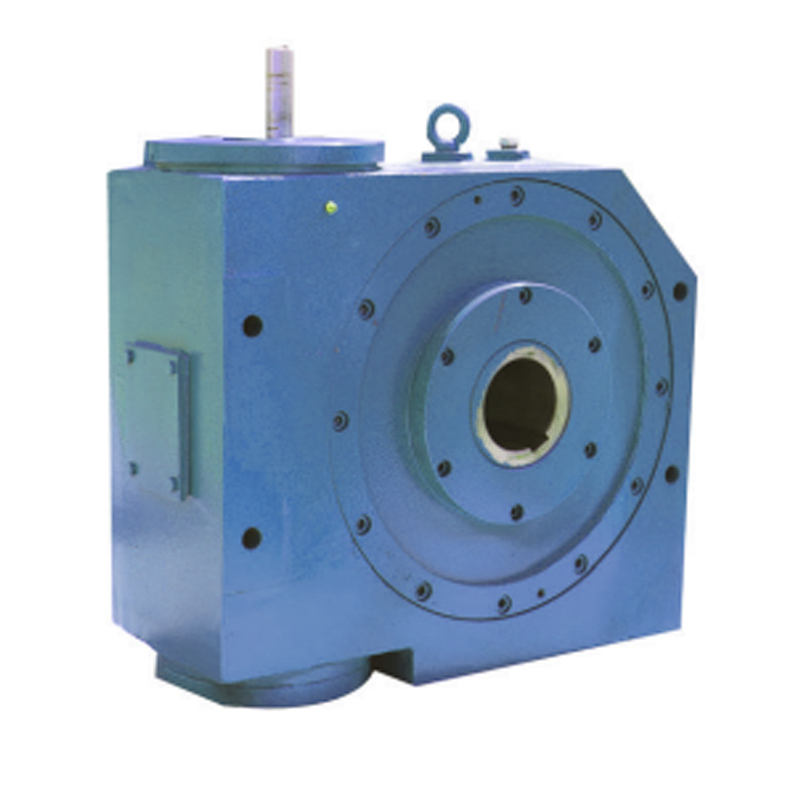
Pain Point: You receive a specification sheet filled with abstract numbers, and without clear priorities, you risk over- or under-sizing the gearbox. An under-sized worm drive fails prematurely; an oversized one wastes budget and space.
Solution: Start by mapping the duty cycle, peak torque, and ambient conditions. Raydafon engineers always begin with a load classification: intermittent, continuous, or shock-loaded. Then determine the required mechanical output torque (T2) and input speed (n1). The two most important parameters are the output torque and the reduction ratio. worm gearboxes are self-locking in many ratios, which adds a safety layer in hoisting applications.
How to size a worm gearbox for a specific application? It is a balance of precision and safety margins. The table below shows a typical torque selection matrix used by our technical team:
| Application Type | Service Factor (Sf) | Typical Torque Range (Nm) | Suggested Input Speed (rpm) |
|---|---|---|---|
| Light duty conveyor | 1.0 – 1.25 | 20 – 150 | 1400 – 1800 |
| Agitator / mixer | 1.25 – 1.5 | 100 – 800 | 900 – 1400 |
| Hoist / lift | 1.5 – 2.0 | 200 – 2500 | 700 – 1200 |
| Heavy shock load | 2.0 – 2.5 | 500 – 5000+ | 500 – 1000 |
Pain Point: Forgetting that motor start-up torque or system inertia can be several times higher than steady-state running torque leads to stripped gears or motor burnout.
Solution: Always calculate both nominal torque and peak torque. Nominal torque (T2N) is derived from the process loads, while peak torque (T2Peak) includes acceleration and overload scenarios. Raydafon’s sizing protocol multiplies T2N by the application-specific service factor (Sf) and then checks that T2Peak never exceeds the gearbox’s peak torque rating. The necessary input power (P1) in kW is determined by P1 = (T2 × n2) / (9549 × η), where n2 is output speed in rpm and η is the worm gear efficiency.
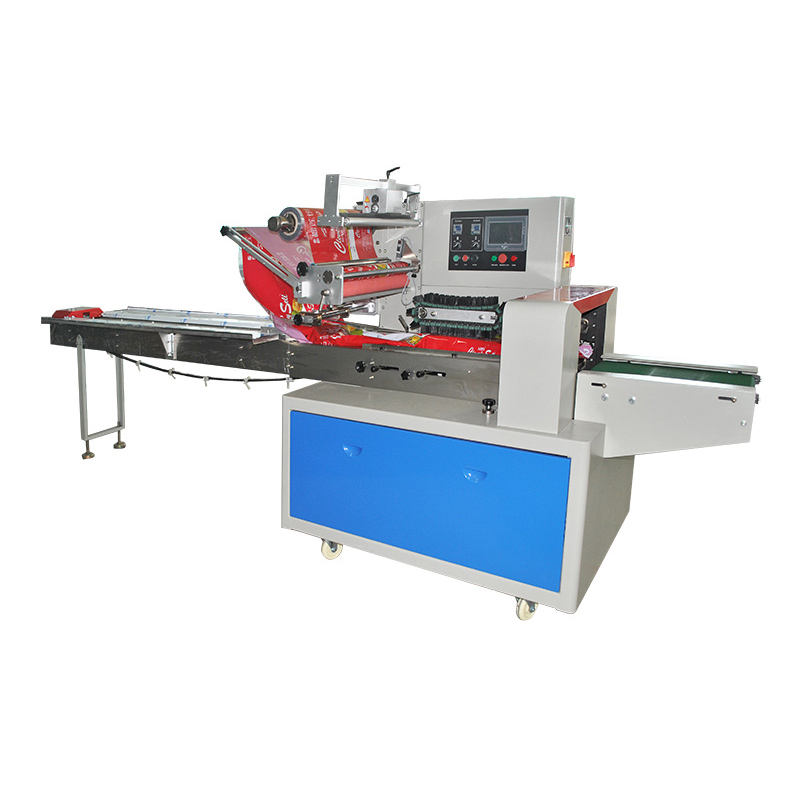
For instance, a packaging machine requiring 300 Nm at 45 rpm with a 1.3 service factor would need a gearbox rated for at least 400 Nm continuous and a peak rating above 520 Nm. Raydafon’s RWV Series often matches such demands precisely, preventing premature failure.
Pain Point: Choosing a ratio purely on catalog numbers without considering actual motor synchronous speed can result in a machine that runs too fast or too slow, undermining productivity.
Solution: Calculate the exact reduction ratio i = n1 / n2. For a 4-pole motor (approximately 1450 rpm) and a required output of 40 rpm, the ratio is 36.25:1. Worm gearboxes commonly offer ratios like 30, 40, 50 as standard. In such a case, a 40:1 box would give 36.25 rpm output—close enough if a speed tolerance of ±5% is acceptable. We always recommend verifying with the motor manufacturer’s actual full-load speed. Raydafon can adjust worm leads and wheel teeth combinations to achieve custom ratios economically.
How to size a worm gearbox for a specific application? Matching the ratio precisely avoids belt slippage and control system inefficiencies. Our engineers often create a speed-torque curve to ensure that the operating point sits within the gearbox’s continuous duty envelope.
Pain Point: Overheating is the number one killer of worm gearboxes, yet many users ignore thermal capacity until the oil degrades and catastrophic wear occurs.
Solution: Every worm gearbox has a thermal power rating (Pth), which is the maximum input power it can dissipate without exceeding the oil temperature limit (usually 90°C for mineral oil). If the actual input power exceeds Pth, you must either select a larger box, add cooling fins, or use synthetic oil. Service factors (Sf) include not only load dynamics but also ambient temperature and duty cycle. Raydafon’s teams use a derating table for high ambient conditions:
| Ambient Temp. (°C) | Multiplier for Thermal Power | Recommended Oil Type |
|---|---|---|
| 20 – 30 | 1.0 | Mineral ISO VG 220 |
| 30 – 40 | 0.9 | Synthetic PAO 220 |
| 40 – 50 | 0.75 | Synthetic PAO 320 |
Ignoring thermal limits leads to seal leakage and gear pitting. Our customers in Middle Eastern deserts have doubled gearbox life by adopting Raydafon’s thermal management advice.
Pain Point: A perfectly sized gearbox becomes useless if it cannot fit into the existing machine frame or its output shaft orientation is wrong.
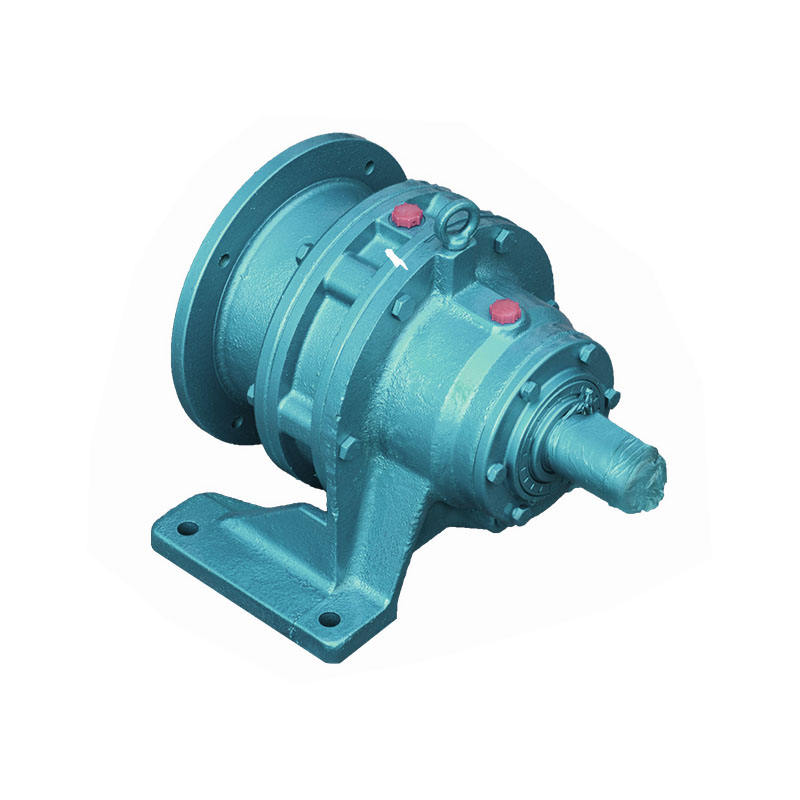
Solution: Worm gearboxes come in various mounting configurations: foot-mounted, flange-mounted, hollow-shaft, and right-angle units. For replacing a legacy gearbox, measure the shaft diameter, center height, and bolt pattern. Raydafon’s Series W offers IEC motor flanges that allow universal motor attachment, simplifying procurement. Also consider the overhung load on the output shaft; if heavy sprockets or pulleys are mounted directly, a larger shaft and reinforced bearings are needed. We often specify a separate bearing support to extend life.
How to size a worm gearbox for a specific application? Integration is as important as internal mechanics. Our technical team can provide 3D CAD models within 24 hours to validate fit before ordering, eliminating costly mispurchases.
Q: How to size a worm gearbox for a specific application?
A: Start by defining your load characteristics (continuous, intermittent, shock), determine output torque and speed, then select a ratio that matches your motor speed. Apply the appropriate service factor and check thermal capacity. Finally, confirm mounting compatibility. Raydafon offers free sizing software that guides you through each step.
Q: What factors are most often overlooked when sizing a worm gearbox?
A: Inadequate thermal analysis, ignoring peak torque during start-up, and using a service factor that is too low for the actual duty cycle. Also, many forget to consider the inefficiency of the worm gear itself—efficiency drops at higher ratios and lower speeds, affecting motor selection. Our pre-sales engineers catch these issues early.
Mastering worm gearbox sizing transforms a guesswork crisis into a smooth, reliable drivetrain selection. By following the steps outlined above and using real-world service factors, thermal checks, and mounting verification, you can extend your equipment’s life and slash unexpected downtime. Raydafon Technology Group Co.,Limited has been a trusted partner in the power transmission industry for decades, combining engineering excellence with responsive support. We invite you to leverage our expertise for your next project.
For more tailored sizing assistance or to request a quote, contact Raydafon Technology Group Co.,Limited at [email protected] or visit our website https://www.agricultural-gearbox.org to explore our comprehensive range of worm gearboxes. Our team is dedicated to solving your specific application challenges with precision-engineered solutions.
Beard, J. P., 2018. “Thermal Modeling of Worm Gear Drives: A Practical Approach.” Journal of Mechanical Design, Vol. 140(8), 083301.
Chen, L. & Zhou, M., 2019. “Dynamic Load Analysis for Worm Gear Sizing in Industrial Conveyors.” Mechanism and Machine Theory, Vol. 135, pp. 202–215.
Davis, R. A., 2017. “Efficiency Trends in Enveloping Worm Gears.” Power Transmission Engineering, Vol. 11(4), pp. 34–41.
Hoffmann, K., 2020. “Service Factor Determination Under Variable Duty Cycles.” Gear Technology, Vol. 37(2), pp. 48–55.
Müller, S. & Weber, J., 2016. “Lubricant Degradation in Worm Gearboxes Under High Thermal Loads.” Tribology International, Vol. 97, pp. 412–422.
Ohta, H., 2021. “Effect of Backlash on Positioning Accuracy in Servo-Driven Worm Drives.” Precision Engineering, Vol. 70, pp. 156–163.
Patel, V. & Sinha, R., 2019. “Empirical Correction Factors for Worm Gearbox Thermal Ratings.” Journal of Advanced Mechanical Engineering, Vol. 6(3), pp. 1–12.
Ramos, M. A., 2018. “Design Optimization of Worm Gear Sets Using Genetic Algorithms.” Applied Sciences, Vol. 8(9), 1612.
Simmons, T. L., 2022. “Modern Worm Drive Materials and Fatigue Life Prediction.” Materials & Design, Vol. 218, 110702.
Yilmaz, M. & Özel, C., 2017. “Experimental Investigation of Self-Locking Capabilities of Single-Start Worm Gears.” Experimental Techniques, Vol. 41(4), pp. 385–393.