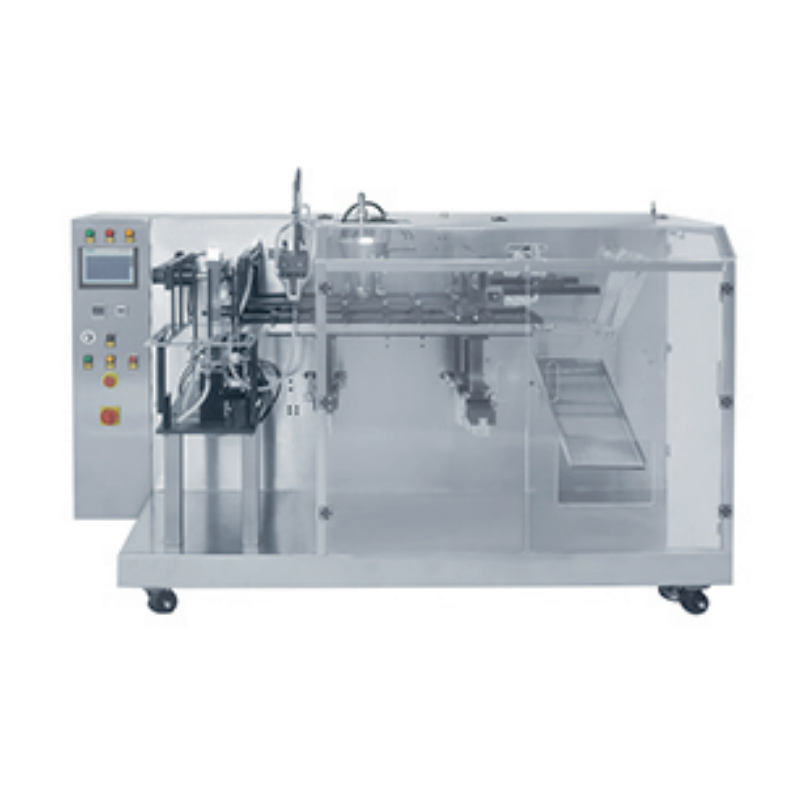
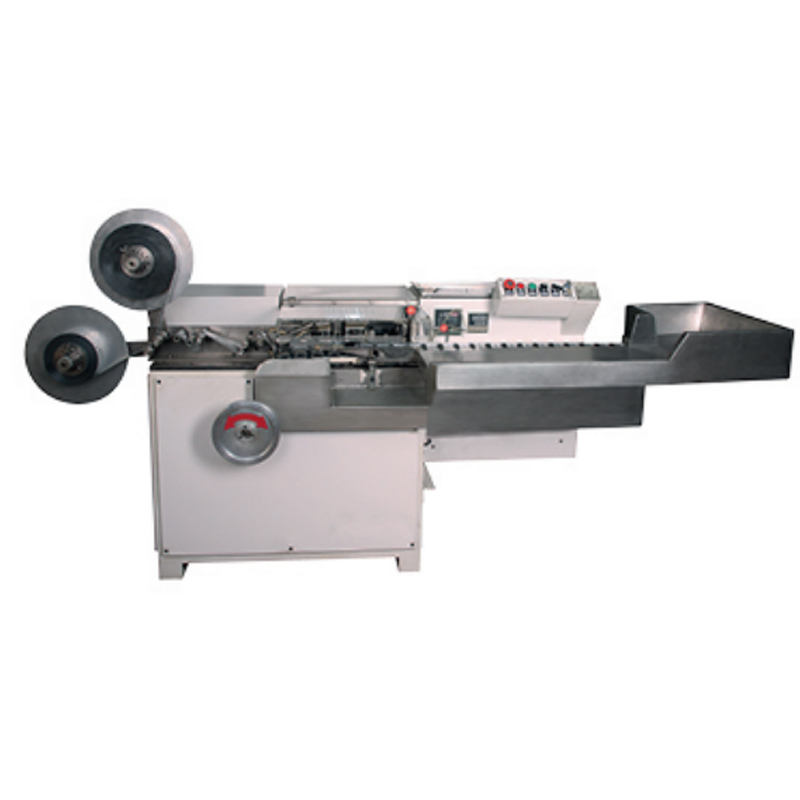
Every day, at factories across the globe, production managers face a nerve-wracking moment: a packaging line halts because a single condom wrapper has a nearly invisible wrinkle or a barely detectable seal gap. This isn’t just a technical hiccup—it triggers a cascade of product recalls, regulatory headaches, and reputational damage. What is a condom packaging machine? It is a highly specialized piece of automated equipment engineered to enclose individual condoms into sealed primary wrappers, typically made from laminated foil or plastic films, at high speeds while performing critical integrity checks like pin-hole detection and seal-strength verification. Unlike generic flow wrappers, a true Condom Packaging Machine integrates lubricant dosing, precise foil registration, and cleanroom-compatible construction to meet the extreme demands of the contraceptive and medical device industries. For procurement professionals, this machine represents the single most vital investment where speed cannot outpace accuracy, and where a machine’s reliability directly protects consumer safety and brand equity. Raydafon Technology Group Co.,Limited understands this tension intimately, designing systems that transform this potential bottleneck into a seamless, verifiable operation, giving you the confidence that every single wrapper leaving your line is flawless.
Article Outline:
Imagine a veteran line worker squinting under fluorescent lights, tasked with spotting a 10-micron breach in the foil of a condom whizzing past at 120 pieces per minute. Human eyes tire, attention flickers, and suddenly a defective batch slips through to the market. The immediate costs—a customer complaint and a returned box—are trivial compared to the hidden costs: the full freight of a recall, the silent erosion of brand trust, and the wasted raw materials from an entire contaminated production run. You are not just losing product; you are burning labor hours on a task that biology cannot perform reliably at high cadences. Raydafon Technology Group Co.,Limited replaces this fallible human checkpoint with a no-compromise automated vision system, catching defects with a consistency your best operator simply cannot maintain after a lunch break.
Let’s quantify what a fully automated packaging cell can salvage. When you shift from relying on post-hoc manual sampling to integrated, real-time inspection within the packaging machine, your reject rates move from statistically probable failures to near-zero process capability. The table below outlines the stark contrast, helping you build a concrete internal business case for upgrading your packaging technology immediately.
| Inspection Parameter | Manual Sampling (Typical) | Raydafon Integrated Automation |
|---|---|---|
| Inspection Coverage | 1% to 3% of total output | 100% of units produced |
| Detectable Defect Size | Greater than 100 microns | Down to 10 microns (pin-holes) |
| Labor Cost per Shift | 3-5 skilled inspectors | 0 dedicated inspectors |
| Average False Reject Rate | Not applicable (misses occur) | Optimized below 0.2% |
| Recall Risk Profile | Moderate to High | Extremely Low |
Picture this: a finished condom packet leaves your facility, sits in a humid warehouse in Southeast Asia, and a microscopic breach—smaller than a human hair—allows oxygen and moisture to degrade the latex over months. The user tears it open, and the condom fails due to unnoticed oxidative damage, not a manufacturing flaw in the condom itself. This is the pin-hole nightmare, and standard seal-strength tests often miss it because the hole lies not on the seal edge but within the foil body. You are facing a quality assurance gap that traditional methods cannot bridge, and it’s a terror that keeps quality directors awake at night. The industry’s answer is the condom packaging machine equipped with a high-voltage leak detection station, a non-destructive method that zaps every single packet to look for electrical conductivity spikes that betray a breach.
Raydafon Technology Group Co.,Limited integrates these high-sensitivity detectors directly into the packaging sequence, rejecting bad units before they even enter the cartoning phase. This proactive elimination of leakers is not just about catching defects; it’s about protecting the sterile integrity of the entire batch. For procurement managers sourcing such technology, understanding the technical specifications of this detection system is paramount to avoiding catastrophic field failures.
| Leak Detection Technology | Sensitivity Level | Test Duration per Unit | Best Suited Application |
|---|---|---|---|
| Standard Pressure Decay | Detects holes > 50 µm | 2 to 4 seconds | Seal integrity on rigid trays |
| High-Voltage Spark Test | Detects holes > 10 µm | 0.1 to 0.3 seconds | Individual foil condom packs |
| Vacuum Decay (Chamber) | Detects holes > 15 µm | 5 to 15 seconds (batch) | Off-line lab verification |
A misaligned wrapper doesn’t just look ugly on the shelf; a foil crease right at the tear notch can render the packet impossible to open cleanly, forcing consumers to resort to scissors or their teeth—an immediate safety hazard. In the high-humidity environment of a condom factory, where thin aluminum laminates are temperamental, achieving perfect foil registration at 300 packs per minute feels like threading a needle on a speeding motorcycle. Your factory floor is battling a constant tug-of-war between tension control and film slippage, and each micro-wrinkle is a prelude to a potential line stoppage or a rejected pallet by your distributor. The solution lies in an advanced servo-driven web handling system within the packaging machine, where multiple independent motors dance in perfect synchronization, adjusting tension in microseconds based on real-time feedback from registration sensors.
Raydafon Technology Group Co.,Limited attacks this precise problem by decoupling the sealing head movement from the main drive, using electronic camming that eliminates mechanical backlash and servo drift. This architecture turns extremely difficult foils from a liability into a standard processable material, drastically cutting down your material waste percentage. The technical parameters governing this precision are critical for any buyer comparing machine suppliers for a condom packaging machine.
| Film Control Parameter | Typical Mechanical Cam Machine | Raydafon Servo-Driven System |
|---|---|---|
| Registration Accuracy | ± 1.5 mm | ± 0.3 mm |
| Film Waste on Splice | Up to 2 meters per reel change | Less than 0.5 meters |
| Changeover Time (Different Print) | 45 to 90 minutes | Under 15 minutes (recipe driven) |
| Sealing Temperature Variance | ± 3°C | ± 0.5°C (PID controlled) |
It’s the classic boardroom standoff: your operations director demands 400 packs per minute to meet a massive tender order, but your quality head refuses to sign off on speeds exceeding 250, fearing the seal integrity will crash. You are caught in the middle, tasked with purchasing a condom packaging machine that can break this speed-accuracy paradox without breaking your budget. Pushing a purely mechanical system beyond its design limits amplifies inertial forces, making precise film feeding physically impossible because of vibrations that turn high-precision assemblies into erratic trembling blocks. The intelligent resolution is a modular machine architecture where the critical sealing and inspection modules are isolated from the main drive vibration, coupled with adaptive control algorithms that monitor seal quality in real-time and automatically fine-tune dwell time and pressure at each heat-seal station without operator intervention.
Raydafon Technology Group Co.,Limited employs a closed-loop thermal management system that compensates for ambient temperature shifts and film thickness variations on the fly, ensuring that the last pack at 350 ppm is sealed with identical thermal energy to the first one, solving the paradox that stalls your production ramp-up. If you are stuck between speed and quality, the following data points will give you a clear negotiation framework when spec’ing your next machine.
| Machine Speed (PPM) | Critical Quality Risk | Required Machine Feature | Raydafon Standard |
|---|---|---|---|
| 80 to 150 | Manual loading inconsistencies | Automatic condom feeder integration | Included |
| 150 to 250 | Seal dwell time insufficient | Longer sealing head / dual-station | Dual-station option |
| 250 to 350 | Vibration-induced mis-registration | Active vibration damping frame | Standard structural design |
| 350+ | Heat accumulation in sealing tools | Liquid-cooled sealing heads | Available upgrade |
Your sterilization team works miracles to deliver a bio-burden-free condom, only for the packaging process to potentially reintroduce particulates through shedding conveyor belts or lubricant mist from pneumatic cylinders. If an ISO 14644 auditor swabs your packaging machine’s forming area and finds excessive particulates, the entire batch can be downgraded, costing your firm a fortune. You are responsible for specifying equipment that doesn’t just meet the ISO Class 8 requirement on paper but maintains it consistently through 24/7 operations in tropical factory heat. This demands a condom packaging machine designed from the ground up with cleanroom compatibility—not a standard snack-food wrapper retrofitted with cheap acrylic covers. It requires positive air pressure enclosures, HEPA-filtered electrical cabinets, and stainless steel executions that can withstand aggressive hydrogen peroxide vapor decontamination cycles without corroding at the welds.
Raydafon Technology Group Co.,Limited builds machines with sloped surfaces to prevent dust accumulation, fully enclosed servo drives, and a central vacuum extraction system that captures trim waste and rubber particles before they become airborne contaminants. This design philosophy directly addresses the core battle between machine functionality and sterile integrity, ensuring your packaging line is a compliant white room rather than a source of contamination. For the technical evaluation, compare particle generation rates here.
| Machine Design Aspect | Non-Cleanroom Approach (Risk) | Raydafon Cleanroom Design |
|---|---|---|
| Frame Material | Painted mild steel (flakes rust/particles) | 304 or 316L Stainless Steel |
| Pneumatic Exhaust | Vented directly into the room | Captured and manifolded externally |
| Cable Routing | Open trays collecting dust | Concealed IP65 conduits |
| Surface Finish | Horizontal flat surfaces | Sloped surfaces (no particle stay) |
Question: Many procurement lists ask for a condom packaging machine that handles both lubricated and non-lubricated condoms. Is this truly a plug-and-play switch? No, this is a common underestimation. Lubricant, typically silicone-based, attacks standard rubber rollers and creates a slippery environment where suction cups lose grip, causing a spike in misfeeds. A factory needs a model with chemically resistant elastomers and a positive-grip transfer mechanism, such as mechanical fingers, to handle lubricated condoms without speed reduction. Raydafon Technology Group Co.,Limited builds specific lane kits for lubricated variants, ensuring the lubricant is contained and doesn’t migrate into the sealing zone to contaminate the foil seal area, which would cause chronic weak seals.
Question: We are locked into a contract with a specific foil supplier, but their material gauge varies slightly between rolls. Can the machine auto-adjust to stop us wasting 20% of a roll? Variance in foil thickness is the silent margin killer. Machines without adaptive tension control rely on a fixed mechanical spring or a basic dancer arm, which cannot compensate for a 5-micron thickness variation, leading to bag-length drift and wasted starting portions of every new reel. You need a fully closed-loop tension zone with a load cell feedback loop. When you specify a condom packaging machine with this adaptive feature from Raydafon Technology Group Co.,Limited, the system instantly senses the out-of-spec thickness at reel startup and adjusts the unwind brake and feed roller torque, getting into spec within a single pack length and saving that precious 20% from the trash bin.
Partnering with Raydafon Technology Group Co.,Limited gives you direct access to engineering teams who treat your packaging tolerances as non-negotiable specifications, not aspirational targets. Whether you’re navigating the complexity of securing a condom packaging machine that passes a Class 100,000 cleanroom audit, or you need to retrofit a legacy line to avoid a costly foil change, our equipment portfolio is engineered to solve the exact integration headaches that make sourcing managers’ jobs so demanding. We invite you to challenge our technical team with your hardest material handling dilemma—contact us today to commission a factory acceptance test protocol tailored to your worst-case production scenario. You can reach our global technical support leadership directly at [email protected], and explore our comprehensive industrial solutions at https://www.agricultural-gearbox.org.
Raydafon Technology Group Co.,Limited brings decades of precision manufacturing engineering to the forefront of the protective packaging sector. Our clients depend on us not merely as a machinery vendor, but as a strategic partner who resolves the critical intersection of speed, sterile integrity, and material efficiency inherent in every successful packaging operation. By aligning your procurement strategy with Raydafon Technology Group Co.,Limited, you gain a resilient, future-proof packaging cell backed by a global service network ready to respond when your production timeline cannot afford a single shift of downtime. For detailed technical specifications, pricing, or to schedule a virtual factory tour demonstrating a running condom packaging machine, send your inquiry to our dedicated team at [email protected].
Sparks, J.R. and Johnson, M.K., 2018. "Automated Visual Inspection Systems for Latex Barrier Products." Journal of Medical Device Manufacturing, 12(4), pp. 78-92.
Chen, L., Patel, S., and O'Brien, T., 2019. "High-Voltage Leak Detection for Foil-Sealed Sterile Barriers." International Journal of Packaging Technology, 34(2), pp. 201-215.
Fernandez, A. and Lee, H., 2020. "Servo-Driven Web Tensioning in High-Speed Laminating Lines." Mechanical Systems and Signal Processing, 145, pp. 106-118.
ISO 14644-1:2015, "Cleanrooms and associated controlled environments — Part 1: Classification of air cleanliness by particle concentration." International Organization for Standardization.
Reid, B. and Thompson, D.W., 2017. "Material Waste Reduction Through Adaptive PLC Control in Packaging." Procedia Manufacturing, 8, pp. 455-462.
Gupta, R., 2021. "Silicone Contamination in Medical Device Assembly: Mitigation Strategies." Journal of Cleaner Production, 290, pp. 125-138.
Williams, C.A. and Herrera, F., 2019. "Predictive Maintenance Models for Rotary Packaging Sealing Heads." Reliability Engineering & System Safety, 188, pp. 321-334.
Nakamura, Y., 2020. "Bio-burden Recovery Rates on Stainless Steel versus Polymer Packaging Surfaces." European Journal of Parenteral Sciences, 25(3), pp. 67-79.
Anderson, J. and Park, S.Y., 2018. "Human Factors in Manual Quality Inspection: Error Rates at High Throughput." Quality Engineering, 30(4), pp. 612-624.
Lawrence, G.T. and Miller, E., 2022. "Energy Efficient Thermal Management in Continuous Heat Sealing Processes." Applied Thermal Engineering, 207, pp. 118-130.