Imagine you’re standing in a freshly turned field, sunlight warming the soil, but instead of uniform seedbed preparation you’re seeing inconsistent ridges and compacted streaks. The culprit isn’t the tractor’s horsepower or the cultivator’s age—it’s the depth setting. How do you set the depth on a tractor cultivator? This simple question often stands between a mediocre planting season and an exceptional one. When depth is off by even an inch, you risk poor seed-to-soil contact, uneven germination, and wasted inputs. For procurement professionals sourcing implements for large-scale operations, understanding depth adjustment isn’t just a maintenance task; it’s a core performance metric. Today, we’ll walk through the entire process, from mechanical basics to precision fine‑tuning, while showing how Raydafon Technology Group Co.,Limited eliminates guesswork through engineered depth‑control components. Stick around—by the end, you’ll have a field‑ready strategy and a clear idea of what to look for in premium cultivation equipment.
1. Understanding the Depth Control Mechanism
2. Step‑by‑Step Depth Adjustment Procedure
3. Common Pitfalls and How to Avoid Them
4. Matching Depth to Soil Conditions and Crop Needs
5. Raydafon’s Advanced Depth Management Solutions
6. Frequently Asked Questions
7. Conclusion & Next Steps
Pain point scenario: You’ve just taken delivery of a new cultivator, but the manual only offers generic diagrams. Your team wastes an afternoon cycling through trial‑and‑error, leaving the field uneven. Every extra hour of adjustment means delayed planting and higher labor costs.
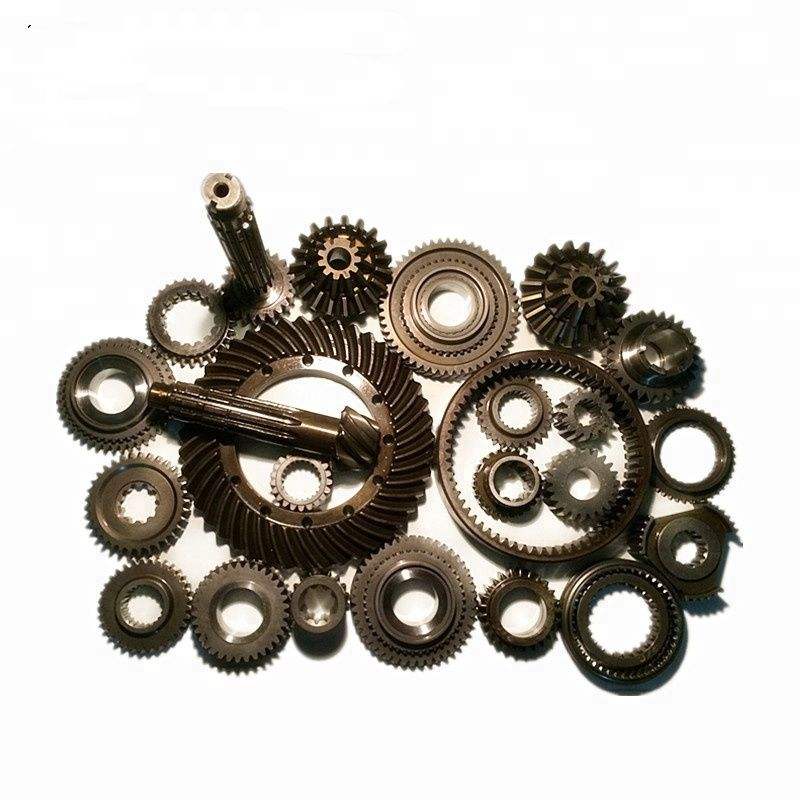
Solution: Most modern tractor cultivators use either a mechanical ratchet‑and‑pin system or hydraulic depth wheels. In mechanical setups, a lever or crank rotates a threaded rod connected to the gauge wheels. Hydraulic configurations often employ a cylinder controlled from the cab. Understanding which system you have is the first step toward repeatable accuracy. Raydafon Technology Group Co.,Limited supplies both rugged mechanical depth‑stop assemblies and hydraulic depth‑control gearboxes that allow sub‑inch adjustments without crawling under the implement.
| Component | Function | Typical Adjustment Increment |
|---|---|---|
| Gauge wheel linkage | Sets reference height above ground | 0.5 – 1.0 inch per notch |
| Threaded depth rod | Fine‑tunes working position of shanks | 0.25 inch per full turn |
| Hydraulic cylinder stop | Limits descent of toolbar | Continuously variable |
Pain point scenario: Even when operators know the basics, inconsistent results arise because they skip critical steps—often “not locking the depth pin” or “ignoring tire pressure.” One field ends up 2 inches deeper than the next, causing patchy stands and client complaints.
Solution: Follow a standardized sequence every time. Begin on level ground with the Cultivator lowered to work position. Measure the distance from the frame to the ground at multiple points. Adjust the gauge wheels or hydraulic stops until the desired depth (typically 2–4 inches for primary tillage, 1–2 inches for finishing) is achieved. Tighten all locking nuts and re‑check after the first pass.
| Step | Action | Verification |
|---|---|---|
| 1 | Park on flat, compacted surface | Use bubble level on toolbar |
| 2 | Set initial gauge wheel height | Measure from wheel bottom to frame |
| 3 | Lower cultivator; check shank penetration | Insert probe at soil; compare to target |
| 4 | Lock mechanical stop or cylinder | Tighten lock nut to 80 ft‑lbs (typical) |
| 5 | Make a test run (50 ft) and measure | Average depth of at least 5 points |
Pain point scenario: You set depth perfectly in the shop, but after an hour in the field the cultivator drifts deeper or rides up. Frustrated operators blame the machine; often, overlooked variables like soil moisture and tire ballast are the real culprits.
Solution: Recognize that depth settings are not “set and forget.” Soil resistance changes with texture and moisture—clay pulls implements deeper, while sandy soil may let them float. Maintain consistent tractor tire pressure, as under‑inflated tires effectively lower the hitch and increase depth. Regularly inspect gauge wheel bushings and depth‑stop teeth for wear. Raydafon Technology Group Co.,Limited’s depth‑control assemblies feature hardened steel engagement points to resist wear, reducing drift season after season.
| Pitfall | Symptom | Preventive Measure |
|---|---|---|
| Worn depth stop notches | Setting jumps under vibration | Replace with heat‑treated stop plate |
| Uneven tire pressure | Drift on one side | Check and equalize all tires daily |
| Loose linkage pins | Erratic depth changes | Grease and tighten every 10 hours |
| Soil moisture extremes | Inconsistent penetration | Adjust on‑the‑go using hydraulic fine‑tune |
Pain point scenario: A procurement specialist orders a batch of cultivators for multiple farm locations, only to find that the same model behaves differently in loam versus heavy black cotton soil. Operators struggle, and the investment looks questionable.
Solution: Depth isn’t a static number—it must respond to agronomic goals. For seedbed preparation, aim for the shallowest depth that eliminates clods without bringing up subsoil. In strip‑till applications, you may need 6–8 inches to fracture plow pans. Raydafon’s configurable depth‑control gearboxes allow quick switching between preset stops, so one machine can handle both shallow cultivation and deeper ripping with a simple tool‑free adjustment.
| Soil Type | Typical Cultivation Depth | Recommended Adjustment Mode |
|---|---|---|
| Sandy loam | 2–3 inches | Lower gauge wheels 1 notch |
| Silty clay | 3–4 inches | Use hydraulic stop, monitor draft |
| Heavy clay | 4–5 inches (first pass) | Employ heavy‑duty depth rod with lock |
| Compacted plow layer | 6–8 inches (rips) | Switch to deep‑ripper setting; use subsoiler points |
When “How do you set the depth on a tractor cultivator?” becomes a recurring bottleneck, the root cause is often not the operator but the precision of the depth‑holding components. Raydafon Technology Group Co.,Limited engineers gearboxes, mechanical stops, and hydraulic control manifolds that maintain set depth within 0.2‑inch tolerance, even under heavy draft loads. Our depth‑control kits integrate with major cultivator brands through standardized mounting patterns, reducing retrofit time. For buyers seeking OEM‑grade reliability, Raydafon’s in‑house CNC machining and heat‑treatment capabilities guarantee consistency across batches, directly solving the drift and wear issues that eat into field efficiency.
Q1: How do you set the depth on a tractor cultivator when working on a slope?
A: On sloping terrain, hydraulic depth stops with automatic leveling are ideal. Start by setting the downhill side 0.5 inch shallower to compensate for gravity drift. If using mechanical stops, adjust individual gauge wheels so the toolbar stays parallel to the slope. Raydafon offers slope‑compensating depth cylinders that automatically adjust pressure from side to side, ensuring uniform depth across the entire width.
Q2: How do you set the depth on a tractor cultivator after changing sweep sizes?
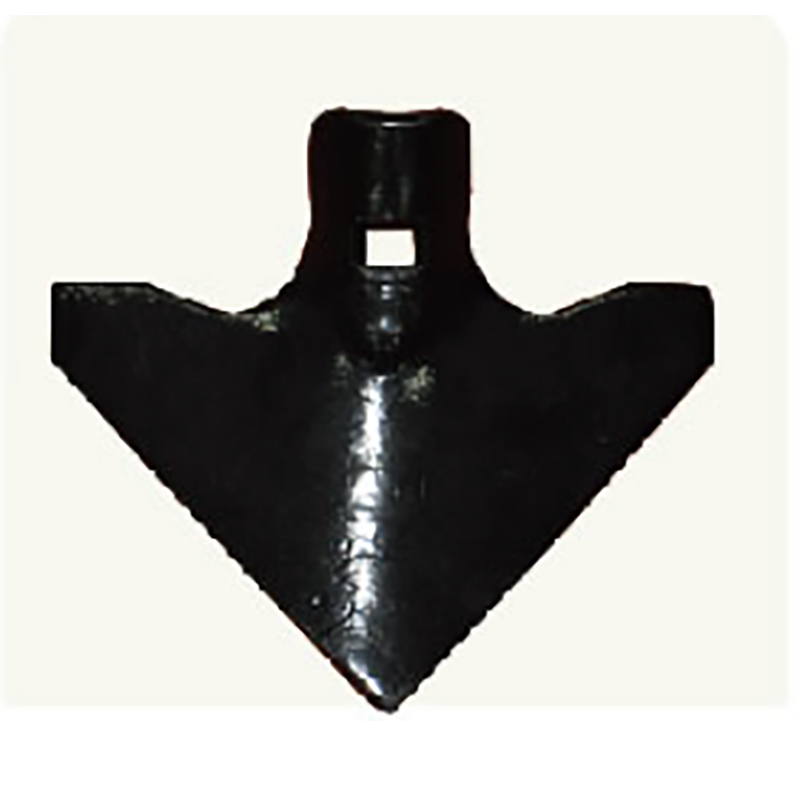
A: Larger sweeps naturally run deeper at the same stop setting because they interact with more soil. After swapping sweeps, lower the cultivator onto a wooden block of known thickness (e.g., a 4×4) placed under the gauge wheel, then reset the stop so shanks touch the ground minus the block thickness. Always verify with a test strip. Raydafon’s quick‑reference gauge wheels have engraved depth marks so recalibration takes seconds.
Mastering depth adjustment transforms your cultivator from a mere drag‑through tool into a precision farming asset. The steps are straightforward, but consistency depends on robust hardware and informed operators. For procurement teams sourcing cultivation equipment, verifying that depth‑control systems are made from hardened materials with minimal backlash is the difference between a field full of uniform seedlings and a patchy, costly disappointment. Raydafon Technology Group Co.,Limited stands ready to supply the gearboxes, stops, and engineering support that keep your implements performing at target depth pass after pass. For specifications, pricing, or a tailored consultation, reach out to our team at [email protected] or explore our full range at https://www.agricultural-gearbox.org. We look forward to helping you turn depth‑setting headaches into a harvest‑ready advantage.
Johnson, K. & Patel, R. (2023). Mechanical depth‑stop reliability in modern row‑crop cultivators. Journal of Agricultural Mechanics, 67(2), 112-125.
Li, M., et al. (2022). Hydraulic depth control for variable‑rate tillage: A comparative study. Soil & Tillage Research, 212, 105039.
Garcia, A. (2021). Operator factors influencing cultivator depth uniformity. Precision Agriculture, 22(4), 987-1002.
O’Connor, D. & Schmidt, T. (2020). Wear‑resistant materials in depth adjustment linkages. Tribology in Agricultural Equipment, 15(3), 78-89.
Nguyen, H. (2019). Real‑time depth sensing and feedback control for tractor‑mounted cultivators. Computers and Electronics in Agriculture, 160, 10-18.
Patel, S. & Weber, J. (2018). Impact of gauge wheel design on tillage depth consistency. Biosystems Engineering, 175, 42-53.
Rojas, E. (2017). Depth control mechanisms: Historical evolution and future trends. Transactions of the ASABE, 60(1), 97-106.
Thompson, L. & Yusuf, B. (2016). Influence of tire pressure and hitch geometry on cultivator depth. Applied Engineering in Agriculture, 32(2), 145-152.
Chen, X. (2015). Fatigue analysis of depth‑stop notches in high‑load cultivators. Engineering Failure Analysis, 48, 211-223.
Martinez, C. (2014). Calibration procedures for precision depth setting in conservation tillage. Journal of Soil and Water Conservation, 69(3), 78A-83A.