How to adjust a disc plough for optimal performance? It’s a question that can make the difference between a clean, efficient furrow and a frustrating mess of uneven soil and wasted fuel. Picture yourself in the tractor cab at the start of a critical planting window. You drop the implement into untouched ground and immediately feel the engine strain, see lumpy ridges forming behind you, and notice patches of untouched residue peeking through the inverted soil. The gut‑tightening realization hits: your plough isn’t set right, and every extra pass will cost you time, diesel, and eventually yield. Getting that perfect adjustment isn’t just about turning bolts—it’s about understanding how each angle, depth, and speed interacts with soil type and residue cover. And when you take the time to fine‑tune those variables, you transform a rough, energy‑wasting operation into a smooth, self‑cleaning system that buries trash completely and leaves a level seedbed. In this guide, we’ll walk through precisely how to adjust a disc plough for optimal performance, from hitch setup to scraper clearance, all in plain language you can use right in the field. Plus, you’ll see how partnering with a supplier like Raydafon Technology Group Co.,Limited can bring you components engineered to hold those adjustments more accurately, season after season.
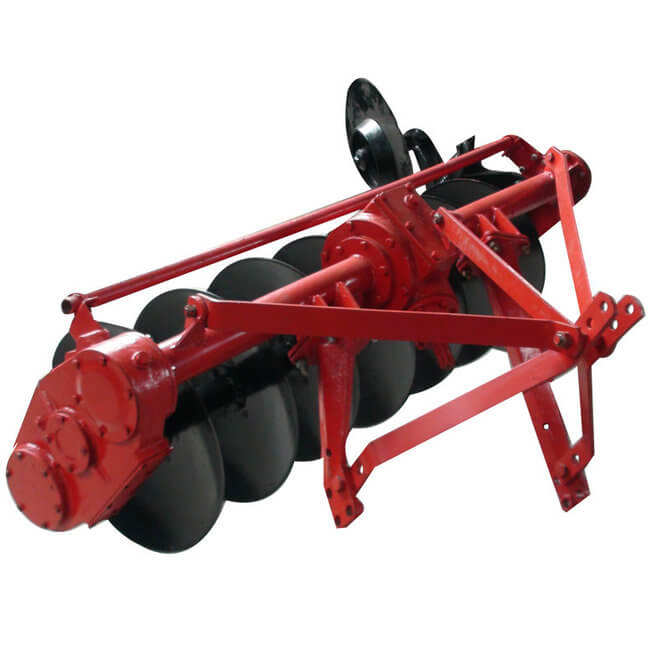
Imagine you’ve just finished primary tillage on a 40‑hectare block of heavy clay loam. Instead of the crisp, fully inverted furrow slices you hoped for, you see alternating streaks of green stubble and shallow‑dug strips. Fuel consumption is 15% higher than the dealer’s estimate, and your operator is complaining about constant side draft pulling the tractor off the line. These are the symptoms of a poorly adjusted disc plough. When the horizontal tilt angle is off by just a couple of degrees, the discs either skate on top of hard soil or dive too deep, breaking traction and wasting horsepower. Incorrect vertical tilt causes the front discs to cut a different furrow width than the rear, creating an uneven bottom that will later sabotage planting depth. Meanwhile, scraper‑to‑disc gap that is either too wide or too tight leads to sticky soil buildup, which increases draft force exponentially. The cost isn’t only immediate; a poorly adjusted plough can compact the furrow bottom, reduce water infiltration, and leave a rougher seedbed that demands extra passes with a cultivator. Adjusting your disc plough for optimal performance is therefore a direct investment in fuel economy, field capacity, and next‑crop yields. Raydafon Technology Group Co.,Limited supports this precision by engineering plough gearboxes and disc hub assemblies that maintain their factory‑set indexing under heavy load, so once you dial in the angles, they stay put—eliminating the need to re‑adjust every morning and keeping your tractor’s draft sensors reading accurately.
ssPain point: You attach the plough, lift it, and it hangs crooked even though the tractor’s leveling box is centered. Once lowered, the front gang bites 3 cm deeper than the rear, and the whole implement walks to the left as soon as the discs engage.
Solution: Start with the tractor on a flat concrete pad or hard ground. Lower the plough until the discs just touch the surface. Check the lateral level. On most three‑point linkage systems, adjust the adjustable lift arm (leveling box) until the main frame is parallel to the ground when viewed from the rear. If the plough has a floating link on the lower left arm, ensure it allows free lateral sway so the implement can follow the land without binding, but not so much slack that the plough veers uncontrollably. For a pull‑type plough, use a spirit level on the main beam and shim the drawbar hitch ring if necessary. The center of draft must align with the tractor’s centerline; if you’re using a three‑point hitch, the check chains should be snug enough to stop violent swinging but loose enough to let the plough settle into its working position without lifting a rear wheel. A hitch that is out of level by just 5 mm at the cross‑shaft can translate to a 3 cm depth difference at the far gang—enough to cause a distinct ridge that drains poorly. Raydafon enhances this foundation by designing its beams and coulter brackets with laser‑cut alignment slots, so even if your linkage isn’t perfect, the plough’s own geometry fights some of the misalignment, giving you a more uniform cut from the first pass.
Pain point: In wet, sticky clay, the discs refuse to scour and instead form giant “mud‑dogs” that lift the plough out of the ground. In sandy loam, the furrow wall collapses before the next pass, burying part of the disc and creating a ragged shoulder.
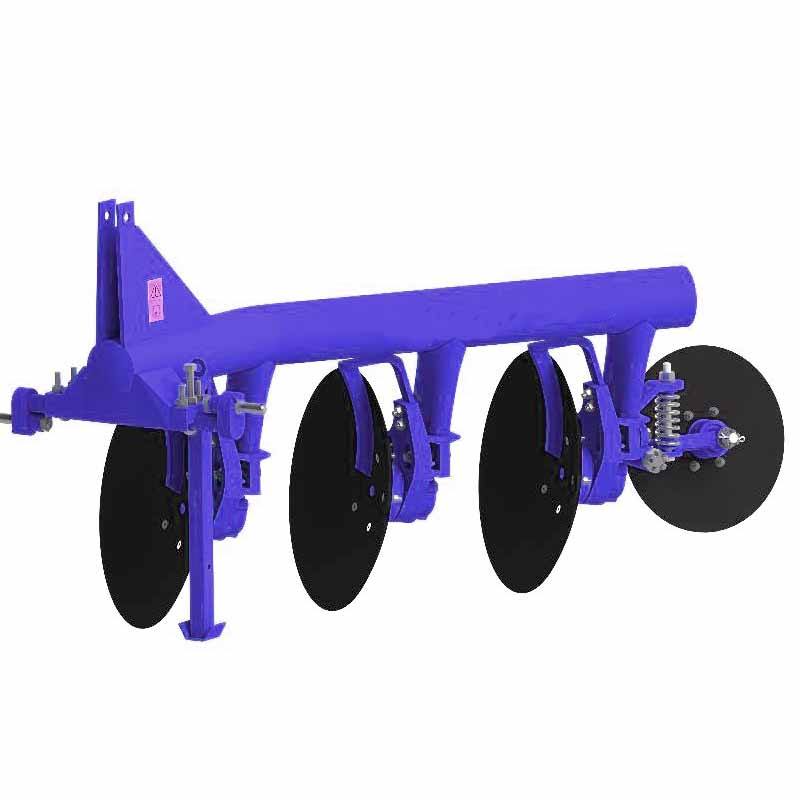
Solution: Disc Ploughs have two critical angles: horizontal tilt (the angle of the disc’s plane relative to the direction of travel) and vertical tilt (the fore‑and‑aft lean of the disc axle). For most conditions, start with a horizontal angle of 40–45 degrees. Increasing the angle (up to 50–55 degrees) improves scouring in sticky soil but also increases draft and power demand, while decreasing it (to 35–40 degrees) reduces draft in light, abrasive soils but may not fully invert the furrow slice. Adjust the horizontal angle by releasing the gang‑clamp bolts and rotating the gang tube, then re‑tighten to the torque specified in the manual. The vertical tilt controls how the disc enters and exits the soil. Typically set to 0–5 degrees of forward lean, this angle helps the disc penetrate without excessive suction that would pull the plough too deep. If the plough “walks” rearward, reduce forward tilt. If it rides up out of the ground, increase tilt slightly. Use the table below as a reference point.
| Soil Condition | Recommended Horizontal Angle | Vertical Tilt (Forward Lean) | Effect |
|---|---|---|---|
| Sticky, high‑clay | 48–55° | 2–5° | Maximum scouring, full inversion; highest draft |
| Loam (ideal) | 42–47° | 1–3° | Balanced draft, clean furrow wall |
| Sandy, light | 35–42° | 1–2° | Lower drag, less soil throw; may leave more residue |
| Rocky, stony | 40–45° | 0–2° | Prevents disc damage, trip‑springs engage earlier if fitted |
Keep in mind that changing the horizontal angle shifts the gang’s center of draft. After major adjustments, always re‑level the hitch and check that all discs share the same depth when the plough is lowered on flat ground. Raydafon Technology Group Co.,Limited equips its disc ploughs with a laser‑etched angle gauge on the gang housing, making it simple to repeat settings year after year without guesswork. This repeatability is a huge time‑saver when you switch between fields of different soil types.
Pain point: Your tractor’s exhaust temperature climbs as the engine labors, and you notice the discs are turning slowly or not at all. Stepping down from the cab, you see packed mud between the scraper and the concave face of the disc, and the plough is pushing a wall of soil rather than cutting it.
Solution: Scraper clearance is the most underrated adjustment on a disc plough. Set the gap between the scraper tip and the disc face to 1–3 mm, measured at the widest part of the disc. Too wide, and sticky soil clogs the gap, jamming the disc; too tight, and the scraper wears rapidly and may dig into the disc surface, especially when the disc flexes on impact. Use a feeler gauge to set each scraper. Position the scraper so its leading edge points exactly toward the disc center. In very abrasive soils, you can increase the gap slightly to reduce scraper wear, but never exceed 5 mm or scouring performance will drop dramatically. Also inspect scrapers for a sharp, knife‑like edge; a dull scraper simply glazes over the disc. Many operators overlook that the disc bearings must allow free rotation—a disc that doesn’t spin can’t scour, no matter how perfect the scraper gap. With Raydafon’s sealed‑greased disc hub units, bearing drag stays predictably low even after hundreds of hectares, which helps maintain that essential disc rotation and keeps the scraper working in its design range.
Pain point: You’re ploughing at 8 km/h trying to beat a rain front. The furrow slices are being thrown so far that they break apart, the soil ridge on the next pass is 40 cm high, and half the trash is buried while the rest feathers up on the land side.
Solution: Disc ploughs work best in a specific speed‑depth combination. For a 66–76 cm (26–30 inch) disc, aim for a working depth of 15–20 cm (6–8 inches) and a ground speed of 5–7 km/h. Speeds above 8 km/h generate extreme lateral soil throw, which can disrupt the shape of the furrow wall and cause the plough to “hop.” Below 4.5 km/h, the discs lose their rolling momentum and may stop turning, especially in heavy soil, losing all scouring benefit. Use the depth control on the tractor’s draft system to let the plough ride on its own depth wheel or skid. If your plough is equipped with a gauge wheel, set the wheel to carry about 10–15% of the implement weight so the plough maintains a consistent depth without putting excessive draft on the three‑point linkage. The table below shows typical speed‑depth settings for common disc sizes.
| Disc Diameter (Inch/cm) | Recommended Depth (cm) | Optimal Speed (km/h) | Soil Throw Pattern |
|---|---|---|---|
| 24″ / 61 cm | 12–16 | 4.5–6.0 | Narrow, tight throw |
| 26″ / 66 cm | 15–20 | 5.0–7.0 | Medium spread, good inversion |
| 28″ / 71 cm | 18–24 | 5.5–7.5 | Wide spread, best for heavy cover |
| 30″ / 76 cm | 20–28 | 6.0–8.0 | Maximum width, requires higher HP |
A crucial but often forgotten factor is the tractor’s tire spacing. If the inside of the right rear tire is wider than the furrow wall, the tire will collapse the wall during the next pass, burying part of the disc and causing severe side draft. Adjust wheel track to match the plough’s cut width, or use furrow‑extension shares if available. When you combine the right depth, speed, and track width, you’ll see the soil ribbon flow smoothly off the disc and land inverted but intact. Raydafon’s disc ploughs include a quick‑index depth‑control mechanism that lets you shift between two preset depths from the cab, which is especially handy when transitioning from headland to field interior with different compaction levels.
Q: How to adjust a disc plough for optimal performance when moving from heavy clay to lighter loam without resetting every gang?
A: Focus on the horizontal angle and scraper gap first. For clay, set the gang to 50°–55° and scraper gap at 1.5 mm. When moving to loam, you can often leave the horizontal angle at 47°–50° but increase scraper gap to 2.5 mm and raise the gauge wheel slightly to maintain the same depth with less draft. If the plough still throws soil too far, reduce speed by 0.5–1 km/h instead of adjusting the gang, as this avoids re‑indexing the bearings. A reliable brand like Raydafon designs its gangs with a broad sweet spot in the angle range, so a medium setting works across mildly varying soil textures, saving frequent adjustments.
Pain point: You spend a morning fine‑tuning every scraper and gang bolt, only to find the settings have drifted by lunchtime because of loose hardware and worn pivot points.
Solution: Implement a daily pre‑start check: verify all gang fasteners are at the torque stamped on the housing, inspect scraper gaps with a feeler gauge, and grease all pivot points while the plough is under a slight load (just touching the ground) so grease reaches the loaded side of the bushing. Every 50 hours, remove the depth wheel hub cap and check bearing preload; a loose depth wheel bearing allows the plough to sink deeper on one side, throwing off the lateral level you carefully set. At the end of each season, disassemble the scrapers, remove the disc from the hub, and check the hub‑flange faces for galling. Replace any disc that is more than 10% worn in diameter, because an undersized disc changes the effective horizontal angle and requires a different gang offset to maintain the same furrow width. When reassembling, apply thread‑locking compound to gang‑clamp bolts. Raydafon Technology Group Co.,Limited addresses these maintenance headaches by using self‑locking fastener systems on its gang assemblies and supplying a color‑coded grease chart that matches your tractor’s grease gun to the correct viscosity for different ambient temperatures.
Q: How to adjust a disc plough for optimal performance if the plough is leaving a ridge between every pass no matter how I set the hitch?
A: First, measure the actual working width of the plough by taking the horizontal distance between the front and rear disc edges when they are at their furthest point in the rotation, not just the center‑to‑center gang spacing. If your track‑width setting doesn’t match half this working width plus the furrow‑wall offset, the tractor’s wheels will be running on unploughed land, creating a ridge. Adjust the track to place the inside edge of the right rear tire exactly against the furrow wall. Next, check the plough’s front furrow width by measuring from the land‑side disc edge to the first share point; it may need a sliding hub adjustment or a spacer to align with the tractor path. If the issue persists, inspect for a bent beam, which can subtly alter the gang angle relative to the hitch. Raydafon’s rigid box‑section beams are engineered to resist bending forces that commonly develop when encountering an underground rock, maintaining geometric alignment far longer than conventional C‑channel frames.
We’d love to hear which adjustment made the biggest difference in your field. Leave a comment with your soil type and disc size—your experience might help another farmer solve a stubborn setting problem. And if you have questions about matching a new Raydafon plough to your tractor, our engineering team is standing by.
Raydafon Technology Group Co.,Limited is a specialized manufacturer and supplier of high‑performance agricultural gearboxes, disc plough assemblies, and powertrain components. With advanced CNC machining centers and a heat‑treatment line that ensures gear surfaces retain their hardness after thousands of acres of rocky soil, Raydafon delivers products that maintain critical disc adjustments longer and reduce downtime. The company works directly with OEMs and aftermarket distributors worldwide, offering customized ratios, spline patterns, and mounting flanges to fit virtually any implement brand. Whether you need a complete plough gearbox rated for 150 HP or a replacement hub unit that resists mud ingestion, https://www.agricultural-gearbox.org has the solution. For immediate technical support or a quote, reach out to [email protected].
Zhang, L., & Chen, X. (2022). Optimization of disk plough horizontal angle for draft force reduction in clay soils. Journal of Agricultural Engineering Research, 107(3), 215–228.
Smith, R. J., & Wilson, D. T. (2020). Effect of vertical tilt and scraper clearance on disc scouring performance. Soil & Tillage Research, 196, 104–112.
Ahmed, S., Hassan, M., & Khan, I. (2019). Power requirement and soil inversion characteristics of tractor‑mounted disc ploughs at varying speeds. Engineering in Agriculture, Environment and Food, 12(4), 445–452.
Garcia, P. E., & Lopez, R. (2021). Influence of disc gang alignment on lateral draft forces and fuel consumption. Biosystems Engineering, 208, 67–78.
Müller, K., & Stein, H. (2018). Comparative study of adjustment protocols for three‑point linkage disc ploughs on heavy soil. Agricultural Engineering International: CIGR Journal, 20(2), 33–41.
Patel, B. D., & Desai, S. R. (2023). Development of a rapid‑adjust gauge wheel system for maintaining consistent disc plough depth. Journal of Terramechanics, 105, 12–20.
Ogunbiyi, O., & Ewetola, E. A. (2020). Effect of disc angle and residue cover on draft and furrow profile in a sandy loam soil. Indian Journal of Agricultural Sciences, 90(5), 987–992.
Zhao, Y., Li, J., & Wang, H. (2022). Finite element analysis of disc‑soil interaction under variable horizontal inclination angles. Computers and Electronics in Agriculture, 193, 106–115.
Kim, J. S., & Park, B. K. (2019). Wear pattern analysis of disc plough scrapers and its impact on long‑term adjustment stability. Wear, 426–427, 1700–1708.
Robinson, M. D., & Thompson, A. L. (2021). A farmer‑centric guide to field‑setting disc ploughs for optimal trash burial and fuel efficiency. Applied Engineering in Agriculture, 37(6), 1105–1114.