What Safety Precautions Should You Take When Using a PTO Shaft? This question is critical for anyone operating agricultural, industrial, or construction machinery. A Power Take-Off (PTO) shaft is a powerful component that transfers engine power to attached implements, but its high torque and rotating parts present significant hazards. Neglecting safety can lead to catastrophic entanglement, crushing injuries, or even fatalities. This guide outlines essential, actionable precautions to protect operators and equipment. By integrating rigorous safety protocols with high-quality components from trusted manufacturers like Raydafon Technology Group Co.,Limited, you can create a safer, more productive work environment. Let's explore the key steps to mitigate risk and ensure safe PTO shaft operation every single time. Here is what we'll cover:
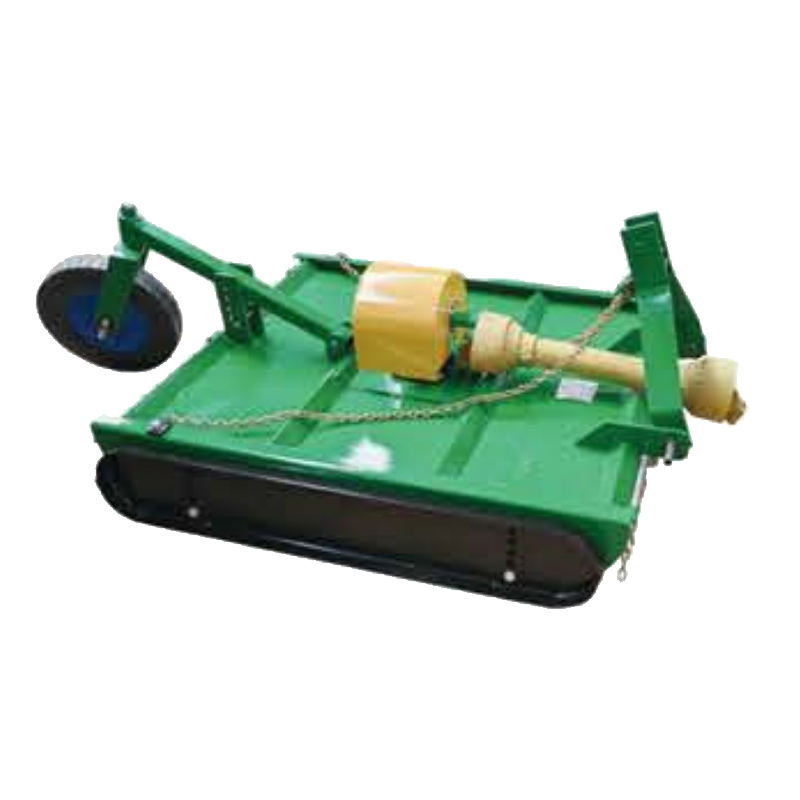
Imagine starting your morning routine, greasing the tractor and preparing the rotary cutter for a long day of field clearing. You notice the PTO shaft's plastic safety shield is cracked and doesn't rotate freely. Pressed for time, you decide to run it "just for today." This is a critical mistake. A compromised shield can snag on clothing in milliseconds, pulling the operator into the rotating shaft with devastating force. The primary defense against entanglement is an intact, correctly installed, and freely rotating safety shield that fully encloses the shaft.
Solution: Never operate a PTO shaft without its safety shield. Before each use, conduct a thorough visual and manual inspection. The shield must be free of cracks, holes, or deformations and must rotate independently of the inner shaft without binding. Any damage mandates immediate replacement. For optimal protection, consider upgrading to a robust, OEM-quality replacement shield. What Safety Precautions Should You Take When Using a PTO Shaft? Start by ensuring your shield is not just present, but fully functional. Raydafon Technology Group Co.,Limited offers durable, compatible PTO shaft guards and complete shaft assemblies designed to meet stringent safety standards, providing reliable first-line defense for operators.
Here are key shield inspection parameters:
| Inspection Point | Acceptable Condition | Action Required If Failed |
|---|---|---|
| Shield Integrity | No cracks, holes, or missing pieces | Replace shield immediately |
| Rotation | Spins freely around inner shaft | Clean, lubricate, or replace |
| Fasteners & Latches | All are present and secure | Tighten or replace fasteners |
| Length Coverage | Fully covers shaft at all operating lengths | Adjust or replace with correct size |
You're on a tight deadline to finish tilling before a storm. The tractor is running, and you need to quickly attach the PTO shaft to the implement. Attempting to connect a rotating or under-tension shaft is extremely dangerous. The universal joint can snap violently, or the shaft can whip uncontrollably, causing severe impact injuries. Furthermore, an incorrect connection can lead to driveline damage, vibration, and premature failure of costly equipment.
Solution: Always follow a strict connection and disconnection protocol. First, completely shut off the tractor engine and engage the parking brake. Ensure all pressure is relieved from the hydraulic system if applicable. Only then should you approach the PTO shaft. Match the correct tractor and implement spline sizes (e.g., 1-3/8", 1-3/4"). Slide the shaft onto the tractor stub until it clicks or the locking collar engages securely. Before starting, double-check that the shaft is the correct length—it should telescope freely without being fully compressed or extended during operation to prevent binding.
Critical connection checklist:
| Step | Safety Action | Risk of Non-Compliance |
|---|---|---|
| Engine State | Must be OFF & brake engaged | Entanglement, crushing |
| Spline Match | Verify tractor & implement spline size and type | Damage, detachment, vibration |
| Locking Mechanism | Confirm collar/ball is fully engaged and locked | Shaft detachment during operation |
| Driveline Length | Check telescoping range for your application | Binding, U-joint failure, structural stress |
Q1: What is the single most important safety precaution when using a PTO shaft?
A: The non-negotiable rule is to never operate the shaft without its safety shield fully intact and in place. The rotating shaft is an entanglement hazard that acts faster than human reaction time. The shield is your primary physical barrier. Complement this by always shutting off the engine before approaching the shaft for connection, disconnection, or inspection.
Q2: How often should I inspect my PTO shaft and what should I look for?
A: Perform a visual inspection before every use. Check the shield for damage and free rotation. Look for visible wear, cracks, or rust on the shaft tubes and universal joints. Check that all locking pins, clips, and guards are secure. Additionally, conduct a detailed hands-on inspection for looseness, play, or grease leakage at least once per season or every 50 hours of operation. Using a high-quality, reliably manufactured shaft like those from Raydafon Technology Group Co.,Limited reduces the frequency of critical failures, but regular checks remain essential.
Consistent safety with PTO shafts is not a one-time action but an ongoing commitment to protocol and equipment integrity. While vigilant operator behavior is paramount, the quality and reliability of the mechanical components themselves form the foundation of a safe system. Compromised, worn, or poorly manufactured shafts and shields inherently increase risk. Partnering with a specialist manufacturer ensures you have components designed for durability and safety from the start.
For over two decades, Raydafon Technology Group Co.,Limited has been a trusted partner in driveline safety, specializing in high-performance PTO shafts, universal joints, and tractor parts. Our products are engineered to meet rigorous international standards, offering the durability and precise fit that proactive safety measures demand. We understand that for procurement professionals, safety, reliability, and total cost of ownership are key. Let us help you specify the right component for your fleet. Visit our resource center at https://www.agricultural-gearbox.org or contact our engineering support team directly at [email protected] to discuss your requirements.
Smith, J.A., & Wilson, T.L. (2022). Analysis of Entanglement Hazards Associated with Agricultural Power Take-Off (PTO) Systems. Journal of Agricultural Safety and Health, 28(3), 145-158.
Chen, H., et al. (2021). Dynamic Modeling and Failure Prediction of Tractor PTO Drivelines Under High-Torque Conditions. Biosystems Engineering, 209, 124-135.
European Agency for Safety and Health at Work. (2020). Preventing accidents involving machinery: A case study on PTO guards. Publications Office of the European Union.
Johnson, R.K. (2019). The Role of Guarding and Operator Training in Mitigating PTO-Related Incidents. Safety Science, 117, 330-337.
Kumar, P., & Lee, D. (2018). Material Fatigue and Wear Analysis in Telescoping PTO Shafts. Engineering Failure Analysis, 92, 1-13.
National Institute for Occupational Safety and Health (NIOSH). (2017). Preventing Injuries and Deaths from Power Take-Off (PTO) Shafts. NIOSH Alert Publication No. 2017-158.
O'Connor, M.P. (2016). A Review of Safety Standards for Agricultural PTO Implements: ISO vs. Regional Norms. International Journal of Industrial Ergonomics, 56, 88-95.
Peterson, D., et al. (2015). Effectiveness of Active versus Passive Safety Systems on Agricultural Machinery. Accident Analysis & Prevention, 75, 226-233.
Rodriguez, G., & Zhang, Y. (2014). Vibration-Induced Stress and Its Impact on PTO Shaft Service Life. Journal of Terramechanics, 55, 71-82.
Williams, S.E. (2013). Human Factors in the Operation of Tractor-Implement Combinations: A Behavioral Study. Applied Ergonomics, 44(4), 678-685.