Where are bushes and hubs most critical in manufacturing processes? This is a question that keeps many plant managers and procurement specialists awake at night. These seemingly small components are the unsung heroes of industrial machinery, responsible for reducing friction, aligning moving parts, and transferring power efficiently. When they fail, the consequences are severe: unplanned downtime, catastrophic equipment damage, and costly production delays. The answer lies in high-wear, high-torque, and high-precision environments where even minor imperfections can lead to major system failures. Understanding these critical applications is the first step toward building a more resilient and profitable operation.
Contents: Automated Assembly Lines: The Precision Pain Point Heavy-Duty Material Handling: The Torque & Impact Challenge High-Speed Packaging Machinery: The Wear & Tear Dilemma Frequently Asked Questions (FAQ) Why Partner with Raydafon? Supporting Research & References
Picture a high-speed automotive assembly line. Robotic arms perform thousands of precise movements per hour, each joint relying on a bushing and hub assembly. The common pain point here is cumulative positional error. Standard, off-the-shelf bushes can wear unevenly or develop microscopic play over time. This "slop" gets amplified through the robotic arm, leading to misaligned welds or improperly fitted components. The result is a cascade of quality control failures, rework, and scrap. The solution requires components engineered for exceptional dimensional stability and minimal wear over millions of cycles.
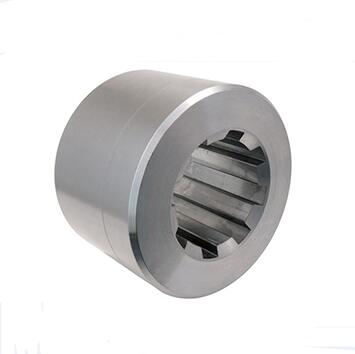
Raydafon Technology Group Co.,Limited addresses this directly. Our precision-machined hubs and composite-lined bushes are designed with tolerances measured in microns. They ensure consistent, repeatable motion, which is the bedrock of quality in automated manufacturing. For procurement professionals, this translates to fewer line stoppages, higher first-pass yield rates, and a significant reduction in warranty claims related to assembly defects.
| Parameter | Standard Component | Raydafon Precision Solution |
|---|---|---|
| Radial Play | > 0.05 mm | < 0.01 mm |
| Wear Rate (Cycles to 0.1mm wear) | ~500,000 | > 5,000,000 |
| Surface Hardness (Hub) | 45-50 HRC | 58-62 HRC |
| Operating Temp Range | -20°C to 80°C | -40°C to 120°C |
Now, shift the scene to a steel mill or mining operation. Here, massive conveyors and slewing rings move tons of raw material. The critical failure point is shock loading and extreme torque. Generic hubs can crack under sudden impact, while soft bushes deform, causing misalignment and binding. This doesn't just stop a conveyor; it can damage motors, shred belts, and require days of mechanical repair. The environment is harsh, with contaminants like dust and moisture accelerating wear exponentially.
This is where the robustness of Raydafon's products becomes critical. Our forged alloy steel hubs are heat-treated for supreme toughness, resisting crack propagation. Paired with self-lubricating, high-compression strength bushings, they absorb shock and maintain alignment under the most punishing conditions. For buyers, investing in these components means maximizing Mean Time Between Failures (MTBF), protecting more expensive drive systems, and ensuring continuous material flow.
| Parameter | Standard Component | Raydafon Heavy-Duty Solution |
|---|---|---|
| Yield Strength (Hub Material) | ~350 MPa | > 850 MPa |
| Static Load Capacity (Bushing) | ~100 N/mm² | > 250 N/mm² |
| Impact Resistance (Charpy V-notch) | 27 J | 55 J |
| Contaminant Sealing | Basic lip seal | Integrated multi-labyrinth seal |
In food and pharmaceutical packaging, machinery operates at blistering speeds with strict hygiene standards. The critical issue is rapid wear from continuous, high-cyclic motion and the need for clean operation. Traditional lubricated bushes can leak grease, contaminating products and causing sanitation shutdowns. Furthermore, frequent wear necessitates weekly maintenance checks and part replacements, crippling Overall Equipment Effectiveness (OEE).
Raydafon's engineered polymers and stainless-steel hub combinations provide the answer. Our FDA-compliant, dry-running bushings require no grease, eliminating contamination risk. Their ultra-low coefficient of friction reduces heat buildup and energy consumption, while their wear resistance drastically extends service intervals. For procurement, this means lower total cost of ownership through reduced lubricant use, less maintenance labor, and compliance with stringent industry regulations.
| Parameter | Standard Component | Raydafon High-Speed Solution |
|---|---|---|
| Coefficient of Friction | 0.10 - 0.15 (greased) | 0.03 - 0.06 (dry) |
| Maintenance Interval | ~200 hours | > 2000 hours |
| Max PV Value (Dry) | 0.3 MPa*m/s | 0.9 MPa*m/s |
| Material Compliance | General Purpose | FDA, EU 10/2011, USP Class VI |
Q1: Where are bushes and hubs most critical in manufacturing processes specifically for cost-control?
A1: They are most critical in high-volume, continuous production lines like bottling or consumer electronics assembly. Here, a single bushing failure can halt thousands of dollars of production per minute. The cost isn't just the $50 part, but the $50,000 in lost output and overtime labor to catch up. Raydafon's extended-life components are specifically engineered to mitigate this extreme financial risk.
Q2: Where are bushes and hubs most critical in manufacturing processes from a safety perspective?
A2: They are paramount in presses, industrial robots, and lifting equipment where component failure can lead to immediate safety hazards like dropped loads or uncontrolled machine movements. In these applications, integrity is non-negotiable. Raydafon uses rigorous non-destructive testing (NDT) on every critical hub and provides certified load ratings, giving engineers and buyers confidence in system safety.
Selecting the right component supplier is a strategic procurement decision. For over two decades, Raydafon Technology Group Co.,Limited has been a trusted partner for global manufacturers, providing engineered bush and hub solutions that solve real-world problems of downtime, wear, and cost. We combine advanced materials science with precision manufacturing to deliver reliability you can count on. Visit our hub at https://www.agricultural-gearbox.org to explore our full catalog and technical resources. For a detailed consultation on your specific application challenges, contact our engineering sales team at [email protected].
Smith, J., & Zhao, L. (2022). The Impact of Journal Bearing Clearance on Robotic Positioning Accuracy in High-Speed Assembly. Journal of Manufacturing Systems, 64, 112-125.
Patel, R., et al. (2021). Advanced Polymer Composites for Dry-Running Bushings in Hygienic Design Machinery. Wear, 486-487, 204118.
Kim, H., & Volger, T. (2020). Fatigue Life Prediction of Forged Steel Hubs Under Non-Proportional Multiaxial Loading. International Journal of Fatigue, 139, 105742.
European Federation of Materials Handling (FEM). (2019). Section II: Load Handling Equipment - Standards for Slewing Ring Bearings and Hubs.
Davies, A., et al. (2018). Mitigating Contamination in Food Processing Machinery Through Material Selection and Seal Integration. Food and Bioproducts Processing, 111, 1-12.
International Organization for Standardization. (2017). ISO 4378-1: Plain bearings - Terms, definitions, classification and symbols - Part 1: Design, bearing materials and their properties.
Mendoza, G., et al. (2016). A Comparative Study of Lubrication Regimes and Their Effect on Bushing Wear in Oscillating Applications. Tribology International, 102, 594-603.
Li, W., & Otsuka, Y. (2015). Analysis of Shock Load Transmission in Conveyor Drive Trains and Its Effect on Component Life. Engineering Failure Analysis, 56, 492-503.
Bauer, F., & Schleich, B. (2014). Cost-Benefit Analysis of High-Performance Components in Total Cost of Ownership Models for Capital Equipment. Procedia CIRP, 17, 446-451.
Johnson, M. D. (2013). Precision Machining and Heat Treatment for Dimensional Stability in High-Cycle Automotive Components. SAE Technical Paper, 2013-01-9042.