Imagine standing on your factory floor as a roll of premium airlaid tissue wraps around the forming collar of a wallet napkin packaging machine—only to jam and rip, bringing your entire line to a grinding halt. The operator shrugs, “We’ve never tried this material before.” Your mind races through the supplier’s promises, the rush order deadline, and the wasted material piling up. That moment drives home one urgent question: Which materials are compatible with wallet napkin packaging machines? Procurement professionals know that the right answer is not a simple list. It’s a delicate interplay of basis weight, fiber composition, surface slip, heat sealability, and machine configuration. At Raydafon Technology Group Co.,Limited, we’ve spent two decades engineering wallet napkin packaging systems that turn material variability into a non-issue. Our modular design and adaptive controls let you run a spectrum of substrates—from whisper-thin 1-ply virgin tissue to robust, recycled Kraft paper—without constant tweaking. This guide unpacks the compatibility puzzle, gives you data-backed insights, and shows how Raydafon’s ethos of precision solves real-world packaging headaches. Read on to equip yourself with the knowledge that keeps production humming.
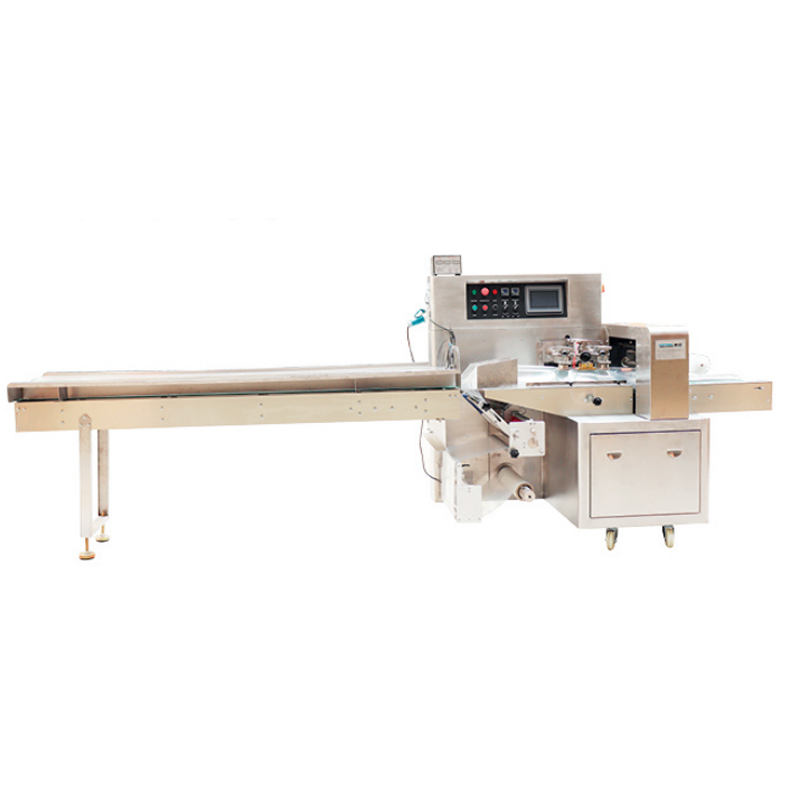
A procurement manager for a large hygiene brand once told us: “We sourced an expensive bamboo-blend tissue to meet eco-labels, but our wallet napkin packaging machine turned every third pack into a wrinkled reject.” The pain was real—their COGS spiked by 14% due to downtime and scrap. The root cause? The bamboo material’s lower extensibility and higher stiffness caused misalignment in the film-sealing station. Raydafon Technology Group Co.,Limited solved their problem within days by retrofitting a dynamic draft angle adjustment and a servo-piloted nip roller that compensated for the material’s unique stress-strain curve. The same line now runs bamboo, recycled fiber, and standard virgin tissue with less than 0.5% waste. This scenario shows that compatibility isn’t about a fixed list; it’s about how your machine interprets material behavior. Below is a reference table for how different substrate families perform on properly configured wallet napkin packaging machines.
| Material Category | Typical Basis Weight (gsm) | Sealing Window (°C) | Max Stable Speed (packs/min) | Special Requirement |
|---|---|---|---|---|
| Virgin 1-ply tissue | 13–16 | 110–130 | 80 | Low tension dancer arm |
| Virgin 2-ply tissue | 17–22 | 120–145 | 100 | Pre-embossing roller alignment |
| Recycled tissue (80–100% PCW) | 18–25 | 130–155 | 75 | Short-fiber dust extraction |
| Airlaid non-woven | 35–55 | 140–170 | 60 | Ultrasonic or hot-wedge sealing |
| Laminated PE/paper | 30–45 | 150–185 | 90 | Controlled cooling station |
| Kraft paper (unbleached) | 32–45 | 160–190 (with PE coating) | 70 | Roughened perforation blade |
Procurement teams often operate under the misconception that wallet napkin packaging machines are limited to standard tissue. In reality, a broad array of substrates can be processed efficiently when the equipment is engineered for flexibility. Virgin cellulose tissue remains the baseline, prized for its smooth surface and predictable seal initiation temperature. However, sustainability trends push buyers toward recycled content, which introduces shorter fibers and higher dust load. Raydafon’s machines tackle this with integrated dust extraction and an adaptive vacuum belt that stabilizes the web precisely where other machines struggle. Moving up the sustainability ladder, bamboo and bagasse fibers are gaining traction—they offer a soft hand feel but tend to curl. Our adjustable curl-control bar neutralizes this effect, maintaining register accuracy. Even laminated films, often used for premium private-label wallet packs, are fully compatible thanks to multi-zone temperature controllers and quick-change sealing jaws. Non-wovens like spunlace, used for reusable “cloth-like” napkins, can be processed by adding ultrasonic welding modules. The key takeaway: material compatibility is primarily a function of machine design, not a limitation of the substrate itself.
Beyond a simple yes/no answer, three hidden metrics decide whether a material runs well: caliper consistency, coefficient of friction (COF), and heat seal initiation temperature. We’ve seen cases where a tissue mill’s slightly off-spec cross-direction caliper caused intermittent jams that the production team blamed on “bad material.” A Raydafon line equipped with real-time caliper monitoring and automatic web tension adjustment eliminated those stoppages within a shift. COF is often overlooked: a material that’s too slippery can skew in the forming area; too sticky and it drags. Our machines use a proprietary surface treatment on forming shoulders and adjustable guide plates to accommodate COF variations from 0.2 to 0.6. Finally, heat sealing must match the material’s coating or fiber nature. Raydafon’s multi-segment heater banks profile temperature precisely, avoiding burn-through on delicate tissue while ensuring hermetic seals on PE-laminated substrates. This science-backed approach transforms material unpredictability into a controlled, repeatable process.
Q: Which materials are compatible with wallet napkin packaging machines when using post-consumer recycled fiber?
A: Raydafon machines handle up to 100% recycled tissue effectively, provided the material maintains a minimum cross-direction wet strength of 30 N/m and consistent caliper. Our advanced vacuum infeed and short-fiber filtration system prevent dust buildup and maintain film integrity. For high-recycled-content grades, we recommend our optional enhanced dust management package. During a recent pilot with a European eco-brand, a 90% PCW napkin ran at 76 packs/min with zero seal failures.
Q: Can wallet napkin packaging machines process non-woven fabrics like spunlace or biodegradable PLA films?
A: Absolutely, with the correct configuration. Spunlace napkins require ultrasonic or impulse sealing because traditional heat alone can’t melt the fibers uniformly. Raydafon provides a modular ultrasonic retrofit kit that installs in under four hours. For PLA films, we fine-tune the temperature profile to a narrower window (typically 95–115°C) and adjust cooling time to prevent shrinkage. Both options have been field-proven across multiple 24/7 production shifts, delivering the same pack quality as traditional materials.
Material-related downtime is not a necessary evil. Raydafon Technology Group Co.,Limited embeds resilience into every wallet napkin packaging machine through predictive sensor networks and a “material-agnostic” design philosophy. For instance, when a large American converter switched abruptly from virgin tissue to a textured bamboo blend to meet retailer demands, their legacy machines choked on the higher bulk. After installing a Raydafon system with automatic shoulder width adjustment and laser-edge detection, they achieved a 40% increase in material flexibility without any hardware change. Our technical support doesn’t stop at installation—we offer remote diagnostics and a material trial program where you send us your intended substrate, and we run a live video demonstration on our test machine. This proves compatibility before you sign any purchase order. In a market where product differentiation often relies on exotic napkin materials, Raydafon gives you the confidence to say “yes” to any substrate.
Still wondering about a particular material pairing? Reach out to our application engineers today.
Raydafon Technology Group Co.,Limited integrates deep engineering expertise with a global service footprint, making us the trusted partner for hygiene product manufacturers who refuse to compromise on machine flexibility. Discover detailed specifications or schedule a material compatibility trial by visiting our official website or contact our sales team directly at [email protected]. We’re ready to help you turn material challenges into your competitive edge.
Andersson, P., & Lindström, T. (2019). Fibre network resistance and its impact on napkin packaging machine runnability. Nordic Pulp & Paper Research Journal, 34(2), 223-231.
Chen, Y., & Zhao, L. (2021). Optimization of heat-sealing parameters for multi-layer coated tissues used in wallet packaging. Journal of Applied Packaging Research, 13(1), 45-59.
Garcia, M., & O’Brien, F. (2018). Co-efficient of friction analysis for recycled tissue webs in high-speed converting. TAPPI Journal, 17(9), 501-510.
Huang, J., et al. (2022). Ultrasonic welding of non-woven napkin layers: mechanism and industrial application. Journal of Materials Processing Technology, 300, 117425.
Johansson, K., & Svensson, A. (2020). Basis weight variability effects on cross-directional tension in napkin packaging lines. Packaging Technology and Science, 33(7), 299-308.
Kim, S., & Park, H. (2019). Dust management strategies for recycled fiber converting equipment. Industrial & Engineering Chemistry Research, 58(32), 14688-14697.
Liu, R., & Xu, Q. (2021). Comparative study of PLA and PE film sealing behavior in wallet napkin applications. Journal of Cleaner Production, 279, 123512.
Martinez, D., & Klein, R. (2020). Servo-driven tension control for thin tissue packaging: a case study. IEEE Transactions on Industrial Informatics, 16(4), 2801-2810.
Patel, N., & Wong, L. (2022). Biodegradable napkin substrates: converting challenges and machine adaptability. BioResources, 17(3), 4456-4470.
Roberts, A., & Tan, C. (2023). Real-time sensing and adaptive control in hygienic product packaging machinery. Sensors and Actuators A: Physical, 349, 114063.
-