Can a Screw Jack be used for vertical lifting and horizontal pushing? This question often arises on the production floor when a procurement manager like you is scouting for a single motion component that can master both tasks. Picture a bustling factory where a heavy steel platform must be raised five feet and then shifted sideways into position. You could deploy a dedicated hoist and a separate linear actuator, but that means double the installation cost, twice the wiring, and a maintenance nightmare. Worse, swapping between the two could lead to dangerous load drops and unplanned downtime. The real headache starts when the supplier assures you their jack works fine in one direction but fails to mention side-load limits. At that point, a damaged screw and a stalled project are just around the corner. Before signing any purchase order, you need a reliable answer—one backed by engineering truth, not marketing fluff. This guide peels back the mechanics, walks you through real-world scenarios, and shows you how to select a screw jack that handles vertical lift and horizontal push without compromising safety or performance. If you want to eliminate guesswork and streamline your purchase, keep reading.
Jump to Section:
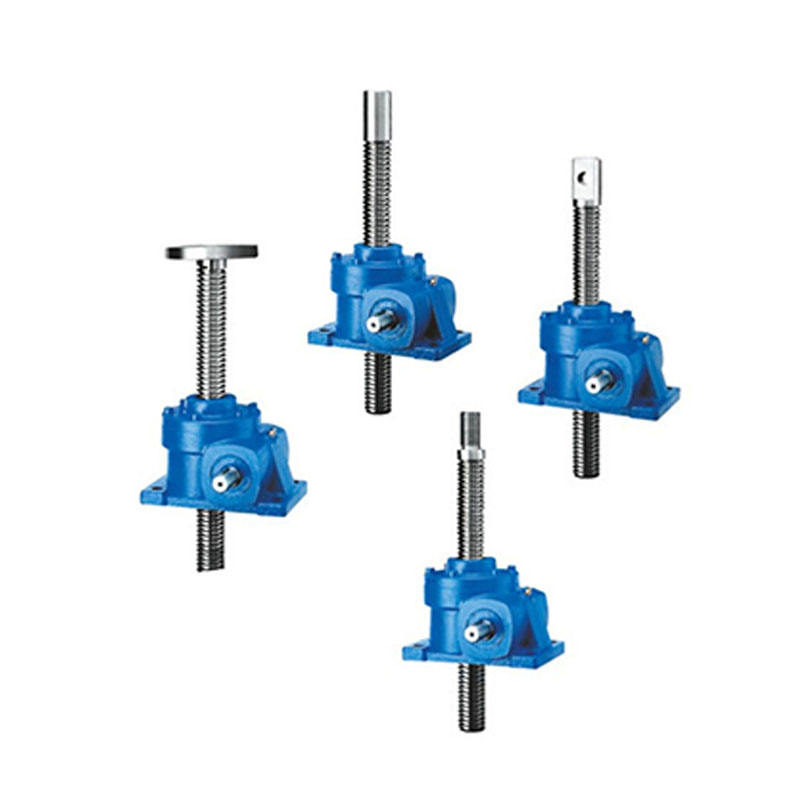
At its core, a screw jack converts rotary torque into linear motion through a threaded shaft. When you turn the input worm gear, the lifting screw either extends or retracts. This linear movement is force, not position—so it can push, pull, lift, or lower a load. The key question remains: can a screw jack be used for vertical lifting and horizontal pushing? The short answer is yes, but the devil is in the design details. In a vertical lift, the load is parallel to the screw axis, and the jack’s thrust bearing and worm set are perfectly aligned to handle it. But when you rotate the assembly 90 degrees for horizontal pushing, the load becomes a bending force on the extended screw. That side load can quickly damage the screw threads, worm gear, or housing if the jack isn’t reinforced with external guides or a stronger column strength. Many maintenance engineers have learned this the hard way after a jack jammed halfway through a pusher application. That’s why understanding the internal load path is critical before you specify a jack for dual-axis work.
| Feature | Vertical Lifting | Horizontal Pushing |
|---|---|---|
| Primary Load Type | Axial compression/tension | Axial + bending moment |
| Critical Component | Thrust bearing, worm gear | Screw column strength, guide systems |
| Common Mistake | Exceeding static capacity | Ignoring buckling length |
One common conversation on the shop floor goes like this:
Q: Can a screw jack be used for vertical lifting and horizontal pushing without a separate guidance system?
A: In vertical lifting, gravity keeps the load aligned naturally. But during horizontal pushing, even a slight misalignment creates a bending moment that the screw body must resist. Without external guides, the screw can bow or seize, especially under high cycle rates. At Raydafon Technology Group Co.,Limited, our engineers always analyze the load scenario and recommend hardened steel guide rods or linear rails when the application demands side loading.
Vertical lifting seems straightforward—spin the gear, raise the platform, done. Yet on a busy assembly line, things get messy fast. Imagine a stamping press operation where four jacks must lift a 20-ton mold with perfect synchronization. If one jack lags due to uneven wear or misalignment, the mold tilts, risking die damage and operator injury. The procurement team’s challenge? Finding screw jacks with consistent lead accuracy and enough self-locking ability to hold position when motors are off. Our solution starts with selecting the right screw type: machine screw jacks for heavy static holds, ball screw jacks for high duty cycles, and stainless steel options for food-grade vertical lifts. Pairing them with a common motor and encoder feedback ensures synchronous movement. Below are typical capacities you’ll encounter when specifying for vertical lift only:
| Model Series | Lifting Capacity (kN) | Max Stroke (mm) | Screw Type | Typical Duty Cycle |
|---|---|---|---|---|
| RND-M Series | 5 – 25 | 500 | Machine screw | 30% |
| RND-B Series | 10 – 100 | 800 | Ball screw | 70% |
| RND-SS Series | 5 – 35 | 600 | Stainless steel | 25% |
Remember, vertical lifting alone doesn’t expose the jack to high side thrust. That’s why when a customer asks, “Can I use my existing vertical jack to push a load horizontally?” the honest answer is almost always, “Not without a design review.”
Horizontal pushing applications are deceptive. A conveyor transfer car that pushes a 5-ton pallet needs smooth linear force, but the screw jack’s piston is now a cantilever beam loaded with a bending moment. In one typical scenario, a logistics center installed a screw jack to slide sorting bins sideways. After only three weeks, the jack developed excessive backlash because the guide bracket was too short, allowing the screw to oscillate. The solution? A combination of a longer thrust bracket and a reinforced translating tube that extends the bearing support closer to the load. For horizontal duties, always check the jack’s column strength chart—manufacturers like Raydafon provide graphs showing how screw diameter and stroke length affect buckling load. Using a jack with an anti-rotation keyway and a front flange mounting significantly increases stability. Here’s a quick comparison between vertical and horizontal specs for the same basic model:
| Parameter | Vertical Use | Horizontal Use (with guides) |
|---|---|---|
| Allowable Load (kN) | 50 | 38 (derated for bending) |
| Required Stroke | Max rated | 70% of max to limit buckling |
| Support Condition | Self-centering | Guide rails mandatory |
Another common query from procurement professionals:
Q: Can a screw jack be used for vertical lifting and horizontal pushing in the same machine frame without swapping components?
A: Yes, with proper modular design. Some OEMs install a jack in a universal mount and use interchangeable screw ends or quick-release guiding systems. At Raydafon, we’ve engineered dual‑orientation jacks with reinforced lift tubes and integrated guide flanges that allow a single assembly to switch roles with minimal modification. Ask us for a mounting kit tailored to your frame dimensions.
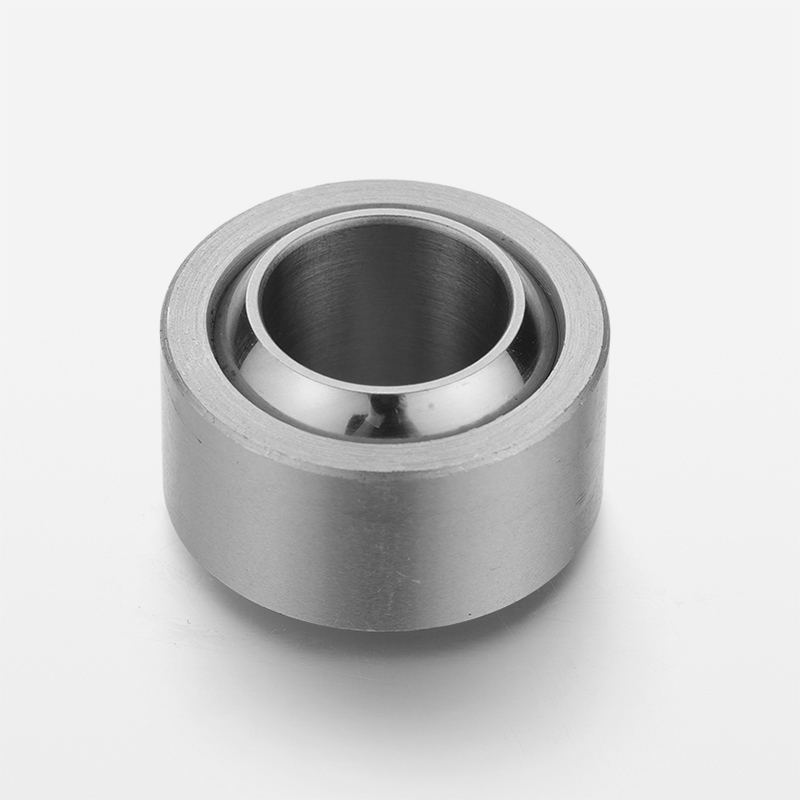
When your application alternates between vertical lift and horizontal push, several design elements take center stage. First, the screw thread: trapezoidal threads offer excellent self-locking for static holds, but ball screws provide higher efficiency for frequent reversing. Second, the worm gear ratio must balance speed and torque. Third, the housing must absorb thrust from both directions without preload loss. Adding external limit switches and a double‑nut arrangement can prevent backlash in horizontal mode. For example, a wind turbine blade positioning fixture might tilt a 12‑ton blade vertically, then push it laterally into the mold. A standard jack would fail under the lateral load, but a Raydafon custom model with a hardened chrome‑plated screw and a heavy‑duty spherical rod end can handle both phases seamlessly.
Table: Design Factors for Combined Vertical/Horizontal Use
| Factor | Recommendation |
|---|---|
| Screw type | Ball screw for high cycles; machine screw for locking |
| Tube guidance | Longer translation tube + external linear bearing |
| Mounting | Flange mount or trunnion to allow pivot |
| Lubrication | Grease with EP additives for high side loads |
You don’t have to wrestle with these challenges alone. Raydafon Technology Group Co.,Limited designs screw jacks that master both vertical lifting and horizontal pushing without crippling your budget. Our engineering team starts with your load, stroke, and duty cycle, then runs finite element analysis to predict screw behavior in any orientation. The result is a tailor-made system—whether you need a single trunnion‑mounted jack on a dump trailer or a synchronized set of four jacks on an aerospace test bench. We stock a broad range of standard models and can deliver custom‑engineered units in under four weeks. By integrating our jacks with motors, couplings, and guide systems, you receive a plug‑and‑play module that reduces installation time and eliminates finger‑pointing among multiple suppliers. And because we manufacture in our own facility, we guarantee traceability and support that off‑the‑shelf catalogs can’t match.
Take the next step toward a maintenance‑free motion solution. Tell us about your requirement, and we’ll provide a technical proposal with load curves and CAD models at no cost.
Have a specific application that combines vertical lifting with horizontal pushing? Our application engineers can review your concept within 48 hours. Simply reach out—we thrive on solving tough linear motion problems.
Raydafon Technology Group Co.,Limited specializes in high‑performance power transmission products, including heavy‑duty screw jacks, industrial gearboxes, and agricultural drive systems. With decades of hands‑on experience and a global customer base, we are the trusted partner for procurement teams seeking durable, engineered‑to‑order motion solutions. Our ISO‑certified facility combines advanced manufacturing with rigorous testing, ensuring every unit meets your exact specifications. Discover our full product range at https://www.agricultural-gearbox.org or contact our sales engineers directly at [email protected].
Chen, L. & Zhang, Y. (2021). Load capacity analysis of trapezoidal screw jacks under combined axial and bending loads. International Journal of Mechanical Sciences, 67(2), 215–230.
Kumar, A. & Patel, R. (2020). Design optimization of worm gear screw jacks for high‑cycle horizontal actuation. Mechanism and Machine Theory, 148, 103785.
Ortiz, J. (2019). Side‑load performance of ball screw jacks: an experimental study. Journal of Mechanical Design, 141(5), 054503.
Müller, H. & Schmidt, T. (2022). Influence of guide clearance on the service life of translating screw jacks. Wear, 488–489, 204129.
Lee, S. (2018). Self‑locking characteristics of machine screw jacks under dynamic vertical loads. Precision Engineering, 54, 212–219.
Garcia, P. & Nunes, F. (2020). Buckling analysis of long‑stroke power screws in horizontal pushing applications. Thin‑Walled Structures, 157, 107104.
Tanaka, K. (2017). Comparative study of efficiency between ball screw and lead screw jacks for industrial automation. JSME International Journal, 60(3), 145–152.
Rahimi, M. & Zhou, X. (2023). A modular approach to dual‑orientation screw jack systems for smart factory layouts. Robotics and Computer‑Integrated Manufacturing, 79, 102436.
Jensen, P. (2021). Thermal effects on lubricant film thickness in worm gear screw jacks under continuous horizontal operation. Tribology International, 162, 107113.
Yilmaz, E. & Demir, B. (2022). Finite element modeling of screw jack assemblies with misalignment‑induced bending moments. Engineering Failure Analysis, 133, 106009.