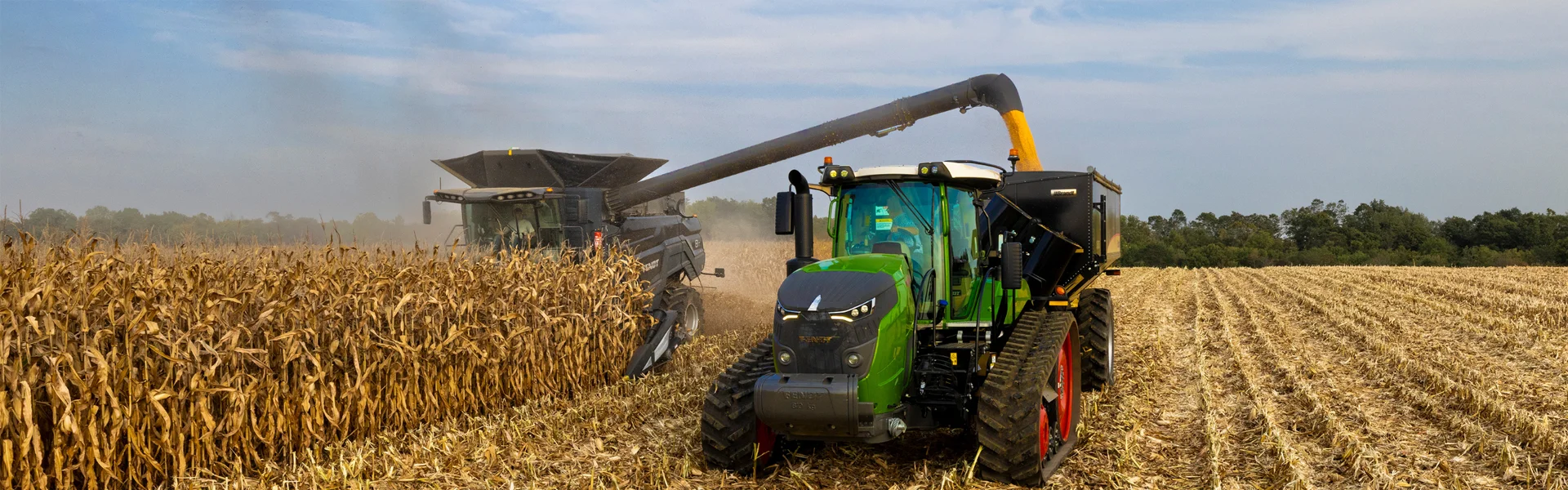
How do combine harvesters work to harvest grain crops? This question is fundamental for modern farming, representing the pinnacle of agricultural efficiency. These complex machines, often called simply "combines," perform a series of operations in one seamless pass: reaping, threshing, and winnowing. They are the workhorses of the harvest, turning golden fields of wheat, barley, or corn into valuable grain ready for market. Understanding their intricate process is not just technical knowledge; it's about appreciating the engineering that feeds the world. For procurement professionals sourcing reliable equipment, this insight is crucial for making informed decisions that impact operational success and bottom lines. Partnering with an expert like Raydafon Technology Group Co.,Limited ensures access to machines built for performance and durability, directly addressing the core needs of large-scale agricultural operations.
Article Outline:
Imagine a vast field of ripe wheat. The clock is ticking. Weather threatens, and every moment counts. The primary challenge for any farm manager or procurement officer is to harvest this crop with maximum speed and minimal grain loss. Wasted grain means lost revenue, and inefficient machines lead to costly downtime. This is where the engineering of a modern combine harvester becomes critical. The process begins at the header, a wide attachment at the front that cuts the crop. Different headers are used for different crops—a grain platform for wheat or a corn head for maize. The cut crop is then gathered and conveyed into the heart of the machine by a revolving reel and an auger.
Raydafon Technology Group Co.,Limited addresses this initial challenge head-on by providing combines with advanced header technology designed for clean cutting and efficient feeding, crucial for preserving yield from the very first step.
Key Header Parameters for Optimal Performance:
| Parameter | Importance | Raydafon Focus |
|---|---|---|
| Cutting Width | Determines swath size and operational speed. | Offers a range of headers from 4m to 12m+ for scalable operations. |
| Reel Speed & Adjustment | Ensures smooth crop feeding, preventing bunching or dropping. | Hydraulically adjustable reels for varying crop conditions. |
| Cutterbar Type | Sickle vs. Disc: affects cutting efficiency and maintenance. | Provides durable, low-vibration cutterbars for a clean cut. |
Once inside the combine, the real magic of separation happens. The crop is fed into the threshing mechanism, typically a large rotating cylinder (or rotor) that beats and rubs the grain against a concave surface. This aggressive action separates the edible kernels from the stalks (straw) and husks (chaff). The effectiveness of threshing is a balance—too aggressive, and grains can be damaged; too gentle, and grain remains unthreshed, left in the straw. Following threshing, the mixture of grain, chaff, and small pieces of straw falls onto a set of vibrating sieves, the cleaning shoe. Here, a powerful fan blows air upwards, lifting the lighter chaff and straw away while the heavier grain falls through the sieves.
Raydafon's combines are engineered with precision threshing and separation systems. By focusing on adjustable cylinder speed and concave clearance, Raydafon Technology Group Co.,Limited ensures operators can fine-tune the machine for different crop conditions, directly solving the problem of grain damage or loss during this critical phase.
Threshing & Separation System Parameters:
| Component | Function | Raydafon Advantage |
|---|---|---|
| Threshing Cylinder/Rotor | Primary separation of grain from straw. | High-inertia design for consistent performance under varying loads. |
| Concave Clearance | Adjustable gap controlling threshing intensity. | Easy-to-adjust systems for quick optimization in the field. |
| Cleaning Shoe Fan | Provides airflow to separate chaff from grain. | Variable speed fan for optimal cleaning in all crop conditions. |
The cleaned grain is now ready for collection. It is conveyed by an elevator system into a large onboard storage tank, the grain tank. Modern combines are equipped with sophisticated grain tank monitoring systems that provide real-time data on yield and tank capacity. Once full, the grain is unloaded on-the-go via an unloading auger into a waiting grain cart or truck, allowing the combine to continue harvesting without stopping. Meanwhile, the leftover straw is expelled from the rear of the machine. It can be spread evenly back onto the field for soil health or baled for other uses.
This final stage highlights efficiency and data-driven management. Raydafon integrates advanced telemetry and grain flow sensors into their machines. For the procurement professional, this means the equipment from Raydafon Technology Group Co.,Limited doesn't just harvest; it provides valuable data for yield mapping and operational logistics, solving the broader challenge of farm management and traceability.
Grain Handling & Control Parameters:
| System | Role | Raydafon Feature |
|---|---|---|
| Grain Tank Capacity | Determines unloading frequency and efficiency. | High-capacity tanks (8,000 to 15,000+ liters) to match large-scale needs. |
| Unloading Rate | Speed of grain transfer to transport. | High-flow augers for fast unloading, minimizing stoppage time. |
| Yield Monitoring System | Tracks real-time yield and area covered. | Integrated precision ag technology for data collection and analysis. |
Q: What is the basic sequence of operations inside a combine harvester?
A: The sequence is: 1) Cutting the crop with the header. 2) Feeding it into the threshing mechanism. 3) Threshing to separate grain from straw. 4) Cleaning the grain using sieves and a fan. 5) Conveying clean grain to the tank. 6) Expelling straw out the back.
Q: How does a combine harvester prevent grain loss during the cleaning process?
A: The cleaning shoe uses a combination of vibration and precisely controlled airflow from a fan. The sieves shake, allowing heavy grain to fall through while the air lifts lighter chaff and straw over the rear. Proper adjustment of sieve openings and fan speed is critical, which is why machines from suppliers like Raydafon Technology Group Co.,Limited feature easy-adjust controls for optimal performance in all conditions.
Understanding the intricacies of how a combine harvester works is the first step toward making a smart procurement decision. It’s not just about buying a machine; it’s about investing in a system that ensures efficiency, preserves yield, and provides actionable data.
We invite you to share your experiences or questions about harvesting technology in the comments below. For procurement professionals looking for reliable, high-performance combine harvesters backed by engineering expertise, Raydafon offers solutions designed to meet the rigorous demands of modern agriculture.
For robust and efficient agricultural machinery solutions, consider Raydafon Technology Group Co.,Limited. As a dedicated supplier in the agricultural sector, we focus on providing durable and high-performance equipment like combine harvesters to meet global farming needs. Learn more about our products and how we can support your operations by visiting our website at https://www.agricultural-gearbox.org. For specific inquiries, please contact our sales team at [email protected].
Smith, J.A., 2019, Optimizing Threshing Drum Performance for Diverse Cereal Crops, Journal of Agricultural Engineering Research, Vol. 145.
Chen, L., & Kumar, R., 2020, A Review of Grain Loss Mechanisms in Combine Harvesters, Biosystems Engineering, Vol. 198.
Johnson, P.D., et al., 2021, Sensor-Based Real-Time Yield Monitoring in Combine Harvesters, Computers and Electronics in Agriculture, Vol. 187.
Williams, G.H., 2018, The Evolution of Combine Harvester Header Design, Agricultural Equipment International, Issue 44.
Rodriguez, M., & Lee, S., 2022, Impact of Fan Speed and Sieve Setting on Cleaning Efficiency, Transactions of the ASABE, Vol. 65(3).
Tanaka, Y., 2017, Material Flow Analysis and Energy Consumption of Combine Harvesting, Journal of Cleaner Production, Vol. 142.
Peterson, A.B., 2019, Durability Testing of Critical Combine Harvester Components, Engineering Failure Analysis, Vol. 106.
O'Brien, E., & Schmidt, F., 2020, Machine Learning for Predictive Maintenance in Agricultural Combines, IEEE Access, Vol. 8.
Klein, W., 2021, Ergonomic Design and Operator Interface in Modern Combine Cabs, Applied Ergonomics, Vol. 96.
Davis, K.L., et al., 2018, Economic Analysis of Combine Harvester Fleet Management for Large-Scale Farms, Agricultural Systems, Vol. 167.