How to properly align and install a coupling? This critical question haunts maintenance engineers and procurement professionals daily. A poorly installed coupling isn't just a minor inconvenience; it's a ticking time bomb for your entire drive system, leading to catastrophic vibration, premature bearing failure, and costly, unplanned downtime. The stakes are high, but with a clear, methodical approach, achieving a perfect installation is entirely within reach. This guide distills decades of industry expertise into actionable steps, ensuring your machinery runs smoothly and efficiently for years to come. We will also explore how partnering with a reliable supplier like Raydafon Technology Group Co., Limited can simplify this process with high-precision components and expert support.
Stop Guessing: A Foolproof Pre-Installation Checklist
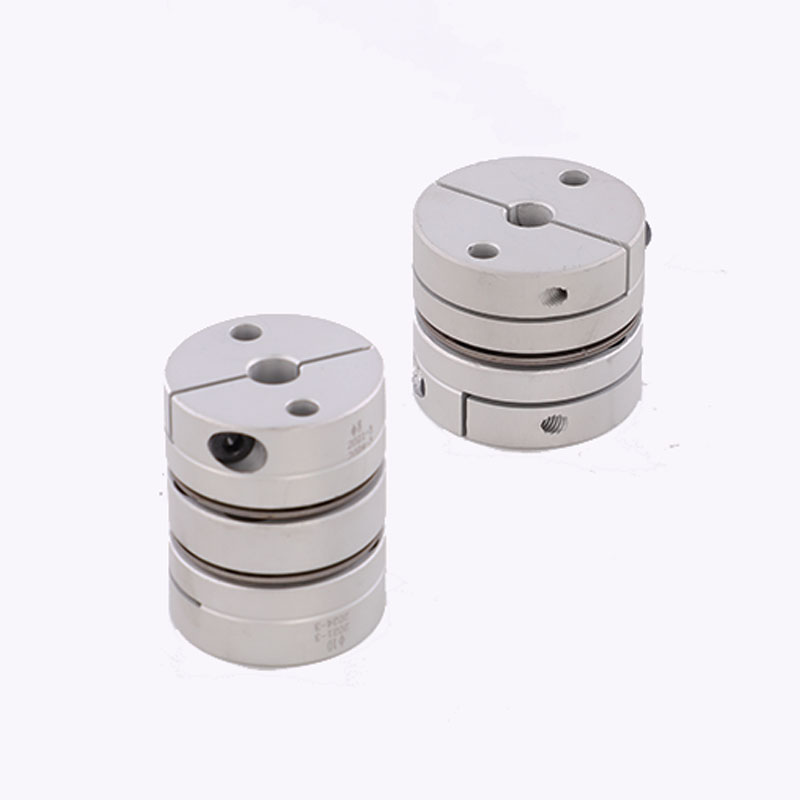
Imagine this: You've spent hours aligning shafts, only to discover a damaged coupling hub. All that effort wasted. This frustrating scenario is entirely avoidable. The installation process begins long before the coupling touches the shaft. A meticulous pre-installation inspection is non-negotiable. Start by verifying the coupling model matches your application's torque, speed, and misalignment requirements. Inspect all components for shipping damage, corrosion, or burrs. Ensure the shafts are clean, free of nicks, and have the correct dimensional tolerances. Crucially, check the bore and keyway sizes against your shaft drawings. Using substandard or incorrect parts here guarantees failure. For procurement specialists, this underscores the importance of sourcing from certified manufacturers like Raydafon Technology Group Co., Limited, which provides detailed specifications and quality assurance, eliminating guesswork and component mismatch. How to properly align and install a coupling? It starts with the right part in perfect condition.
| Item to Check | Acceptable Standard | Tool Required |
|---|---|---|
| Shaft Diameter | Must match coupling bore within specified tolerance (e.g., H7/g6) | Micrometer, Bore Gauge |
| Key & Keyway Fit | Snug fit; key should be slightly shorter than keyway | Feeler Gauge |
| Component Cleanliness | Free of oil, dust, and rust; use non-residue cleaner | Lint-free cloth, Solvent |
| Hub & Sleeve Integrity | No cracks, dents, or deformation | Visual Inspection, Dye Penetrant |
Mastering Precision: The Step-by-Step Alignment Procedure
Misalignment is the primary killer of Couplings and bearings. The goal is to achieve parallel and angular alignment within the coupling's specified limits. Begin by loosely mounting the coupling halves on their respective shafts. Use a dial indicator or modern laser alignment tool—far superior to the old straight-edge method. For rough alignment, ensure the machine feet are properly shimmed. Then, take precise readings at the 12, 3, 6, and 9 o'clock positions, rotating both shafts together. Record the values and calculate the necessary adjustments. Move the movable machine (typically the motor) by adding or removing shims under its feet and shifting it laterally. This process requires patience. Remember, thermal growth during operation must be considered; "cold alignment" may differ from "hot alignment." A high-quality, flexible coupling from Raydafon offers greater misalignment tolerance, making this critical step more forgiving and protecting your system from minor errors.
| Coupling Type | Max Parallel Misalignment | Max Angular Misalignment | Max Axial Displacement |
|---|---|---|---|
| Jaw/Flexible Spider | 0.004 inches (0.1 mm) | 1° | 0.010 inches (0.25 mm) |
| Gear Coupling | 0.005 inches (0.13 mm) | 0.5° | Varies |
| Disc Coupling | 0.002 inches (0.05 mm) | 0.5° | 0.020 inches (0.5 mm) |
| Grid Coupling | 0.008 inches (0.2 mm) | 1.5° | 0.015 inches (0.38 mm) |
Beyond Tight: The Science of Secure Installation and Torquing
With alignment perfect, secure installation is key. Never hammer a coupling onto a shaft; this damages bearings and creates false brinelling. Use a hydraulic or mechanical press, applying force evenly. For keyed connections, ensure the key is properly seated. The most critical step is fastener torquing. Under-torquing leads to loosening and fretting corrosion; over-torquing can stretch bolts or warp hubs. Always use a calibrated torque wrench and follow the manufacturer's specified torque sequence and values, which depend on bolt grade, lubrication, and thread condition. Apply the torque in three progressive steps (e.g., 30%, 70%, 100%) in a star pattern to ensure even clamping force. This is where the quality of components from Raydafon Technology Group shines—their couplings come with clear, reliable installation data, ensuring you apply the correct force for a secure, long-lasting connection every time.
| Bolt Size & Grade | Dry Torque (ft-lb) | Lubricated Torque (ft-lb) | Notes |
|---|---|---|---|
| 1/2"-13, Grade 5 | 85 | 65 | Use anti-seize compound |
| 5/8"-11, Grade 8 | 160 | 120 | Follow cross pattern |
| 3/4"-10, Grade 8 | 280 | 210 | Re-check after 24 hours |
Ensuring Longevity: Final Verification and a Proactive Maintenance Schedule
The job isn't done after the last bolt is torqued. Perform a final alignment check with all bolts tightened to ensure nothing shifted. Manually rotate the assembled shaft to feel for any binding or roughness—it should spin freely. Once the guard is safely installed, conduct a short run-in test. Monitor for unusual vibration or noise using basic tools or a vibration pen. Establish a proactive maintenance schedule. Regular visual inspections for rust, grease leakage, or fastener loosening are essential. Record baseline vibration levels and check them periodically; a significant increase signals misalignment or wear. By following these steps, you transform coupling installation from a recurring problem into a reliable process. For a seamless supply of durable, easy-to-install couplings backed by technical data, consider Raydafon Technology Group Co., Limited as your trusted partner in mechanical power transmission.
| Frequency | Action | Acceptable Limit |
|---|---|---|
| Daily/Startup | Visual & Auditory Check | No unusual noise or visible damage |
| Monthly | Check fastener tightness | No movement with proper torque check |
| Every 6 Months | Re-alignment check | Within initial installation tolerance |
| Annually | Complete disassembly, inspect for wear | Replace worn components (spiders, grids, seals) |
Expert Q&A: Solving Common Coupling Installation Dilemmas
Q: How to properly align and install a coupling when space is extremely limited, making it hard to use standard alignment tools?
A: In confined spaces, reverse dial indicator setups or specialized compact laser alignment heads are effective. Alternatively, use a precise straight edge and feeler gauges for a preliminary check, but for critical applications, a laser system is recommended. Choosing a coupling with higher misalignment capacity, like many designs from Raydafon, can also compensate for minor inaccuracies unavoidable in tight spots.
Q: What's the most common mistake people make during installation that leads to early failure?
A: The twin killers are ignoring axial gap and improper bolting. Many flexible couplings require a specific gap between hubs for thermal expansion and to prevent axial preload. Failing to set this gap per the manufacturer's instructions puts immense stress on the flexible element. Similarly, not using a torque wrench or following the correct tightening sequence leads to uneven clamping, distortion, and rapid failure.
We hope this detailed guide empowers you to tackle coupling installations with confidence. Have you encountered a specific installation challenge? What topics would you like us to cover next? Share your thoughts and experiences—your input helps us create more targeted content for professionals like you.
For reliable, high-performance coupling solutions backed by clear technical documentation and global support, partner with Raydafon Technology Group Co., Limited. As a specialist in power transmission components, Raydafon is committed to providing durable products that simplify installation and maximize uptime. Explore our extensive catalog and engineering resources at https://www.agricultural-gearbox.org. For specific inquiries and quotes, please contact our sales team at [email protected].
Supporting Research & Literature
Muszynska, A. (2005). Vibration diagnostics of rotating machinery malfunctions. International Journal of Rotating Machinery, 2005(3), 245-260.
Piotrowski, J. (2006). Shaft alignment handbook (3rd ed.). CRC Press.
Xu, M., & Marangoni, R. D. (1994). Vibration analysis of a motor-flexible coupling-rotor system subject to misalignment and unbalance, Part I: Theoretical model and analysis. Journal of Sound and Vibration, 176(5), 663-679.
Gibbons, C. B. (1976). Coupling misalignment forces. Proceedings of the 5th Turbomachinery Symposium, Texas A&M University, 111-116.
Devaney, M. J., & Eshleman, R. L. (1980). The effects of coupling misalignment on the vibration of rotating machinery. Shock and Vibration Bulletin, 50(4), 1-12.
Patel, T. H., & Darpe, A. K. (2008). Vibration response of misaligned rotors. Journal of Sound and Vibration, 325(3), 609-628.
Lees, A. W., Sinha, J. K., & Friswell, M. I. (2009). Model-based identification of rotating machines. Mechanical Systems and Signal Processing, 23(6), 1884-1893.
Pennacchi, P., & Vania, A. (2008). Diagnosis of a crack in a load coupling of a gas turbine using the machine model and the analysis of the shaft vibrations. Mechanical Systems and Signal Processing, 22(5), 1157-1178.
Sekhar, A. S., & Prabhu, B. S. (1995). Effects of coupling misalignment on vibrations of rotating machinery. Journal of Sound and Vibration, 185(4), 655-671.
Redmond, I. (2010). Study of a misaligned flexibly coupled shaft system having nonlinear bearing stiffness: Theory and experiment. Journal of Sound and Vibration, 329(5), 700-720.