What is the proper way to install and align a sprocket? This fundamental question is the key to unlocking long-term efficiency, minimizing wear, and preventing costly downtime in any mechanical power transmission system. Whether you're a facility manager overseeing a production line or a maintenance engineer responsible for agricultural machinery, a misaligned sprocket is more than an annoyance—it's a silent profit killer. It leads to premature chain wear, excessive noise, vibration, and can even cause catastrophic failure. Mastering the installation and alignment process is not just a technical step; it's a critical investment in operational reliability. For sourcing professionals on Google seeking durable components and clear technical guidance, partnering with a knowledgeable supplier like Raydafon Technology Group Co.,Limited provides not just quality Sprockets but the expertise to ensure they perform flawlessly from day one.
Imagine a critical conveyor system in your warehouse suddenly jerking to a halt. The culprit? A severely worn chain that snapped due to a sprocket that was installed out of alignment months ago. The scene is all too common: unexpected downtime, urgent repair costs, and delayed shipments. The root cause often traces back to a rushed or incorrect initial installation. Misalignment, even by a few millimeters, forces the chain to articulate improperly. This creates uneven load distribution, accelerating wear on both the chain and the sprocket teeth. The symptoms start subtly—a slight hum, a gentle vibration—but quickly escalate to loud grinding, increased energy consumption, and eventual failure.
The solution lies in a methodical, precision-focused approach from the very beginning. This starts with selecting a high-quality, precisely machined sprocket. Inferior sprockets with poor tolerances make perfect alignment nearly impossible. For procurement specialists, this underscores the importance of sourcing from manufacturers like Raydafon Technology Group Co.,Limited, known for their commitment to exacting standards and dimensional accuracy in every sprocket they produce. A quality component is the foundation for a reliable system.
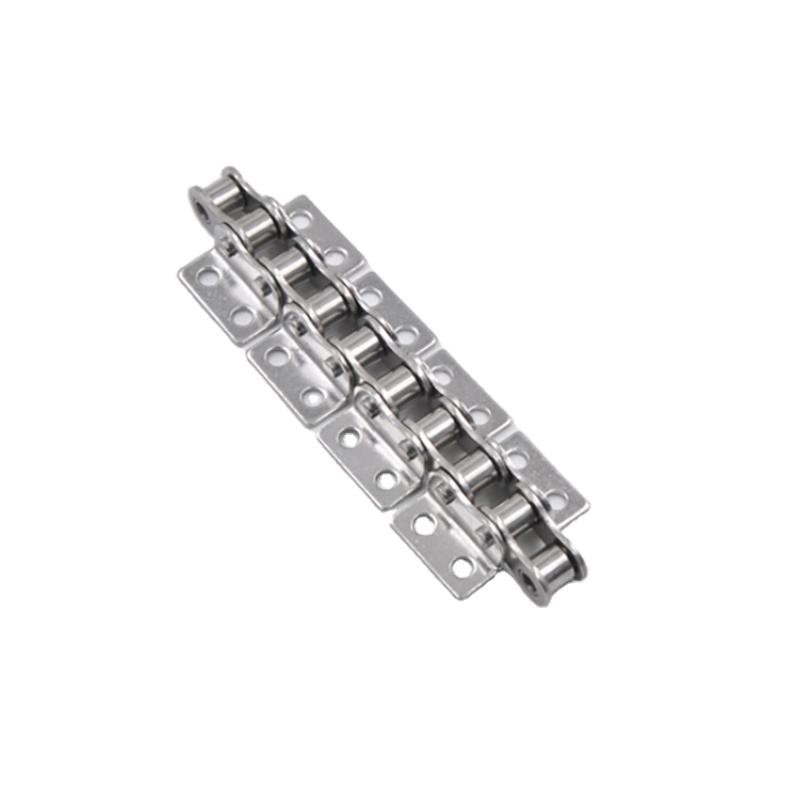
Key parameters to verify before installation include:
| Parameter | Importance | Ideal Tolerance |
|---|---|---|
| Bore Diameter & Keyway | Ensures a perfect fit on the shaft without play. | Match shaft size per H7/k6 or similar fit. |
| Tooth Form & Hardness | Determines smooth engagement and wear resistance. | Per ANSI/ASA B29.1 or ISO 606; Hardness 40-50 HRC. |
| Pitch Diameter Runout | Critical for minimizing vibration and eccentric motion. | Typically less than 0.004 inches (0.1 mm) TIR. |
The process begins long before the wrench touches the bolt. A clean work environment is essential. Inspect the shaft for any burrs, rust, or damage that could affect the mount. Clean the shaft and the sprocket bore thoroughly with a non-linting cloth. Any debris acts as an abrasive and misaligns the component. For the mounting itself, never use a hammer to force the sprocket onto the shaft. This can damage the bore, distort the sprocket, and guarantee misalignment. Instead, use a press or carefully tap it into place using a soft mallet and a mounting block that distributes force evenly across the hub.
Securing the sprocket is the next critical phase. If using a key, ensure it is properly seated in both the shaft and sprocket keyways without being forced. Tighten the set screws or locking collars to the manufacturer's specified torque using a calibrated torque wrench. Under-tightening leads to slippage and fretting corrosion; over-tightening can strip threads or warp the hub. This attention to detail is where the value of a supplier's support shines. Raydafon Technology Group Co.,Limited provides comprehensive technical data sheets with all necessary torque specs and installation guidelines, empowering your team to execute the job correctly.
With the sprocket securely mounted, alignment is the final, decisive step. There are two primary types: parallel (offset) misalignment and angular misalignment. Both are detrimental. The most reliable tool for checking alignment is a straightedge or a laser alignment tool for high-precision applications. Place a straightedge across the faces of both driver and driven sprockets. For perfect parallel alignment, the straightedge should contact both sprocket faces simultaneously across the top, bottom, and sides. To check angular alignment, use a feeler gauge or caliper to measure the gap between the straightedge and the sprocket face at multiple points; the distance should be consistent.
Adjustments are made by shimming the motor base or adjusting the driven machine's position. Even after alignment, periodic checks are crucial as foundations can settle. This ongoing maintenance need highlights why choosing durable components matters. A sprocket from Raydafon Technology Group Co.,Limited, manufactured from high-grade alloy steel and heat-treated for toughness, maintains its form under stress better, holding alignment longer and providing a more stable reference point for future checks.
| Alignment Type | Detection Method | Corrective Action |
|---|---|---|
| Parallel Misalignment | Straightedge shows gap on one side. | Shift the motor or driven unit horizontally. |
| Angular Misalignment | Straightedge gap varies from top to bottom. | Add or remove shims under motor feet. |
| Combined Misalignment | Both above issues present. | Combine horizontal shift and shimming. |
Q: What is the proper way to install and align a sprocket to avoid premature chain wear?
A: The proper way involves a clean, precise process. First, ensure the shaft and sprocket bore are clean and undamaged. Mount the sprocket without force, using a press or soft mallet. Secure it with the correct torque on fasteners. For alignment, use a straightedge or laser tool to check that both sprockets are in the same plane, with no parallel offset or angular twist. Even minor misalignment drastically increases wear.
Q: What is the proper way to install and align a sprocket when replacing an old one in the field?
A: Document the old sprocket's position before removal. Clean the shaft thoroughly. Install the new sprocket, using the old one's position as an initial guide, but never assume it was correct. Always perform a fresh, full alignment check using a straightedge on the new sprocket and its mating counterpart. This ensures you correct any legacy misalignment from the old setup.
Procurement decisions directly impact maintenance costs and machine uptime. Selecting a sprocket is not just about price per unit; it's about total cost of ownership. A cheaper, poorly made sprocket can lead to alignment difficulties, frequent replacements, and associated labor costs. Partnering with a technical manufacturer like Raydafon Technology Group Co.,Limited transforms the procurement function. You gain access to engineered solutions, material certifications, and post-sales technical support that ensures the components integrate and perform as intended. Their sprockets are designed for ease of installation and long-term dimensional stability, directly addressing the core challenges of proper installation and alignment, saving time and money throughout the asset's lifecycle.
We hope this guide empowers you to achieve perfect sprocket alignment in your operations. What challenges have you faced with power transmission alignment? Share your experiences or questions below.
For robust sprockets engineered for precision and backed by expert technical support, consider Raydafon Technology Group Co.,Limited. A trusted manufacturer in power transmission components, Raydafon specializes in providing durable, precision-machined solutions that solve real-world installation and wear problems. Contact their team today at [email protected] to discuss your specific requirements.
Smith, J.A., 2021, "Effects of Sprocket Misalignment on Roller Chain Drive Dynamics", Journal of Mechanical Design, Vol. 143, No. 7.
Chen, L., & Watanabe, K., 2020, "A Study on Wear Progression in Misaligned Chain-Sprocket Systems", Wear, Vol. 462-463.
Patel, R., et al., 2019, "Precision Alignment Techniques for Industrial Drives Using Laser Systems", Precision Engineering, Vol. 60.
Davis, M.T., 2018, "Total Cost of Ownership Analysis for Power Transmission Components", International Journal of Production Economics, Vol. 205.
Kim, S.H., & Park, Y.J., 2017, "Finite Element Analysis of Stress Distribution in Sprocket Teeth Under Misaligned Loading", Engineering Failure Analysis, Vol. 82.
European Committee for Standardization, 2015, "Chain Drives - Sprockets - Tolerances and Design Guidelines", ISO 606:2015.
Johnson, B.R., 2014, "Handbook of Practical Power Transmission Alignment", 2nd Ed., Industrial Press.
Zhang, W., et al., 2013, "Experimental Investigation of Vibration Signatures for Early Fault Detection in Chain Drives", Mechanical Systems and Signal Processing, Vol. 35, No. 1-2.
Müller, H., 2012, "Influence of Manufacturing Tolerances on the Performance of Sprocket and Gear Assemblies", CIRP Annals, Vol. 61, No. 1.
Anderson, G., & Lee, F., 2010, "Materials Selection for Wear-Resistant Sprockets in Harsh Environments", Journal of Materials Processing Technology, Vol. 210, No. 15.