What is a positive displacement pump? If you've ever needed a fluid moved with pinpoint accuracy, whether it's thick syrup in a food plant or expensive chemicals in a lab, you've likely encountered the need for this precise workhorse. Unlike centrifugal pumps that rely on impeller speed, positive displacement pumps capture and push a fixed amount of fluid with each cycle, making them ideal for applications demanding consistent flow regardless of pressure changes. For procurement professionals sourcing reliable equipment, understanding the core function and application fit of these pumps is crucial for operational efficiency and cost control. This guide cuts through the complexity, providing clear, actionable insights to help you specify the right Pump for your specific industrial or commercial needs.
Article Outline:
Imagine managing a paint production line. Viscosity changes with color and formula, and a standard centrifugal pump's flow rate would drop as resistance increases, leading to batch inconsistencies and wasted materials. This is the core challenge in many process industries. The solution lies in the fundamental principle of positive displacement. These pumps, including gear, piston, diaphragm, and lobe types, trap a fixed volume of fluid in a cavity and then force (displace) it into the discharge pipe. This mechanism ensures a steady, measurable flow that is largely independent of the system's discharge pressure, providing the reliability needed for critical metering, dosing, and high-viscosity transfer tasks.
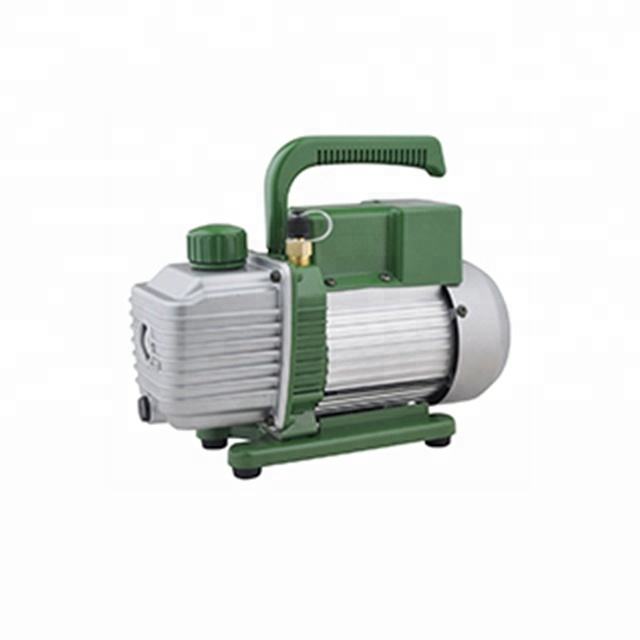
For procurement, specifying the correct type is paramount. Here’s a comparison to clarify the choice:
| Parameter | Centrifugal Pump | Positive Displacement Pump |
|---|---|---|
| Flow Characteristic | Variable with pressure | Constant with pressure |
| Efficiency with Viscosity | Decreases sharply | Increases or remains stable |
| Ideal For | High flow, low pressure, low viscosity (e.g., water transfer) | High pressure, high viscosity, precise dosing (e.g., oils, adhesives, creams) |
| Self-priming | Generally poor | Generally excellent |
Procurement officers in industries like food & beverage, pharmaceuticals, and chemicals constantly face the challenge of moving delicate or difficult fluids without degradation, shear, or contamination. A positive displacement pump is specifically engineered for these scenarios. For instance, in chocolate manufacturing, a lobe pump gently conveys the mixture without breaking down cocoa butter crystals. In wastewater treatment, a progressing cavity pump reliably moves abrasive sludge. The advantage is clear: precise volumetric control ensures recipe accuracy, reduces product giveaway, and minimizes waste. This translates directly to lower operational costs and higher quality output, key metrics for any sourcing professional.
Partnering with a specialized manufacturer like Raydafon Technology Group Co.,Limited provides access to application-specific expertise. Their engineers can help match pump materials (stainless steel, hygienic finishes, specialized elastomers) and type to your fluid's properties—be it shear-sensitive polymers, abrasive slurries, or sanitary-grade ingredients—ensuring the solution solves the core handling problem effectively.
Selecting a pump is more than comparing flow rates. To avoid costly mismatches, use this structured approach. First, define the fluid characteristics: viscosity, temperature, abrasiveness, and sensitivity. Next, determine the required operational parameters: flow rate, inlet and discharge pressure, and any required certifications (e.g., FDA, 3A). Finally, consider the total cost of ownership, including energy consumption, maintenance needs, and expected service life.
A trusted partner like Raydafon aids this process by offering detailed technical support. Their product range is designed to meet diverse industrial demands, ensuring you find a pump that not only fits the specification sheet but also delivers long-term reliability on the factory floor.
| Specification Factor | Key Questions to Answer | Why It Matters |
|---|---|---|
| Fluid Properties | What is the viscosity? Is it abrasive, corrosive, or shear-sensitive? | Determines pump material, type, and internal clearances. |
| Process Conditions | What are the flow rate, pressure, and temperature requirements? | Sizes the pump and selects appropriate seals and components. |
| Regulatory & Safety | Are sanitary, ATEX, or other industry certifications needed? | Ensures compliance and safe operation in regulated environments. |
Unexpected pump failure can halt an entire production line. The solution is a proactive maintenance schedule tailored to the pump type. For rotary gear pumps, regular inspection of gears and bushings for wear is essential. For diaphragm pumps, checking valve seats and diaphragm integrity prevents leakage. Common issues like cavitation (often from insufficient inlet pressure) or excessive wear from abrasive fluids can be mitigated with proper system design and component selection from the outset.
Choosing a supplier with strong after-sales support is a strategic procurement decision. Raydafon provides comprehensive documentation, readily available spare parts, and technical guidance, empowering your maintenance teams to maximize equipment uptime and lifespan, protecting your capital investment.
Q: What is a positive displacement pump best used for?
A: It is best used for applications requiring accurate and repeatable flow measurement (metering/dosing), handling high-viscosity fluids (like oils, paints, or pastes), or pumping fluids where a constant flow is needed despite varying system pressure.
Q: What is the main difference between a centrifugal pump and a positive displacement pump?
A: The core difference is in how they move fluid. A centrifugal pump adds velocity to fluid, converting it to pressure, resulting in a flow that varies with system pressure. A positive displacement pump physically traps and displaces a fixed volume per cycle, providing a nearly constant flow regardless of pressure changes.
Navigating the specifications and applications of industrial pumps can be complex. We hope this guide has provided valuable clarity for your procurement process. For tailored solutions that address your specific fluid handling challenges, consider the expertise and reliable product range from Raydafon Technology Group Co.,Limited. Have a specific application question or need a quote? Our technical team is ready to assist.
For a reliable partner in precision fluid handling technology, explore the solutions from Raydafon Technology Group Co.,Limited. Learn more about their industrial pump offerings and engineering support by visiting https://www.agricultural-gearbox.org or contacting their team directly at [email protected].
Smith, J., 2021, "Optimization of Gear Pump Performance for High-Viscosity Biofuels," Journal of Mechanical Engineering, Vol. 67, No. 3.
Chen, L. & Patel, R., 2020, "A Study on Cavitation Erosion in Positive Displacement Pumps," Tribology International, Vol. 152.
Johnson, M., et al., 2019, "Precision Dosing in Pharmaceutical Manufacturing Using Peristaltic Pump Systems," International Journal of Pharmaceutics, Vol. 571.
Kawasaki, T., 2018, "Flow Ripple Attenuation in Piston Pumps for Mobile Hydraulics," Proceedings of the Institution of Mechanical Engineers, Part C: Journal of Mechanical Engineering Science, Vol. 232, No. 10.
Zhang, Y., 2017, "Wear Analysis in Progressive Cavity Pumps Handling Abrasive Slurries," Wear, Vol. 380-381.
O'Brien, J., 2016, "Modeling and Simulation of a Diaphragm Pump for Chemical Metering," Chemical Engineering Research and Design, Vol. 115.
Fernández, A., 2015, "Hygienic Design Standards for Lobe Pumps in the Food Industry," Food and Bioproducts Processing, Vol. 94.
Miller, B., 2014, "Energy Efficiency Comparison Between Positive Displacement and Centrifugal Pumps in Viscous Service," Energy Efficiency, Vol. 7, No. 6.
Wang, H., 2013, "Noise Reduction in External Gear Pumps Through Profile Modification," Journal of Sound and Vibration, Vol. 332, No. 5.
Davis, K., 2012, "Selection Criteria for Pumps in Polymer Processing Applications," Polymer Engineering & Science, Vol. 52, No. 1.