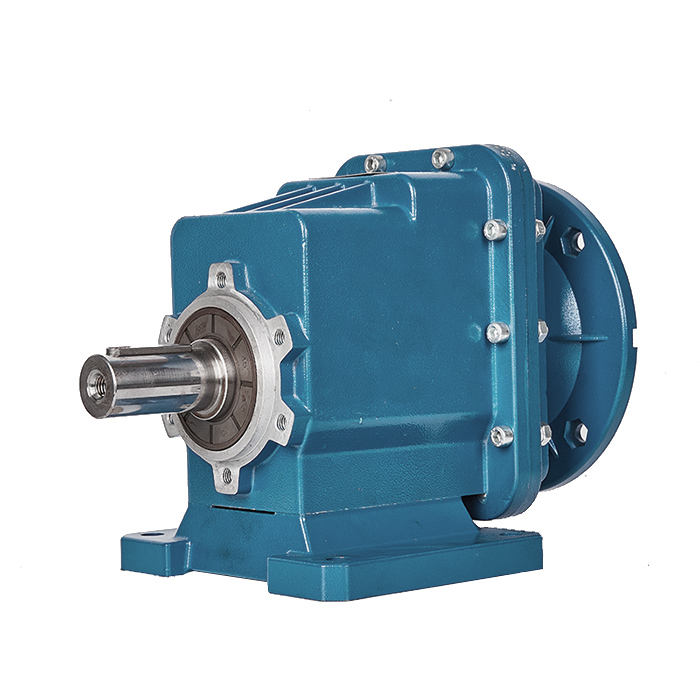
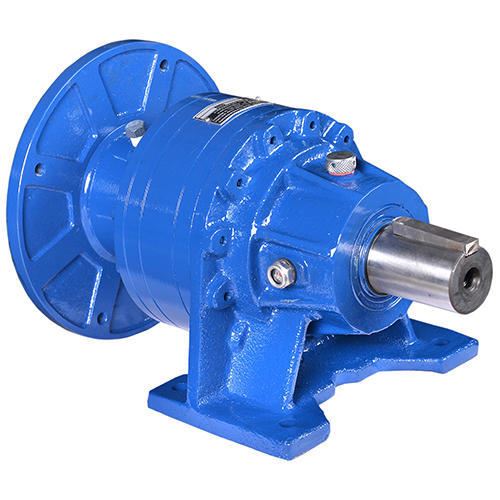
Products
Precision Planetary Gearbox

Precision Planetary Gearbox

A precision planetary gearbox range for servo and stepper motor applications, covering three series in inline and right-angle configurations. Rated output torque runs from 9 N·m to 2000 N·m across frame sizes from 40 mm to 220 mm, with ratios from 3:1 to 200:1 and three backlash grades so the unit can be matched to the accuracy the axis actually needs — from ≤1 arcmin on the tightest PAB one-stage grade to ≤10 arcmin on the standard PPG two-stage grade. Efficiency is ≥97 % for one stage and ≥94 % for two stages on the inline PAB and PPG series, and ≥95 % and ≥92 % on the right-angle PABR series. The PAB series is inline (coaxial); PABR adds a helical bevel input stage to turn the drive through 90 degrees where the machine envelope will not accept a motor projecting along the axis, and it reaches higher one-stage ratios up to 20:1. Construction uses an ADC12 aluminium alloy die-cast housing, a 40Cr ring gear, and 20CrMnTi planet gears case-hardened to HRC 58–62 at the surface with an HRC 33–40 tough core, with output carried on high-precision taper roller bearings that accept axial and radial loads from an overhung pulley or pinion. The input is a keyed hollow shaft with a motor adaptor flange machined to standard servo and stepper motor mounting patterns, and output is available as a keyed or keyless solid shaft. Send the required output speed and torque, the positioning accuracy the axis needs, and the motor brand, frame size and shaft diameter, and we will confirm the series, frame size, ratio and backlash grade with a quotation.

Precision Planetary Gearbox — Servo Planetary Reducer, 9–2000 N·m, Backlash from ≤1 arcmin

A servo-grade planetary gearbox range for motion control applications, covering inline (PAB, PPG) and right-angle (PABR) configurations with rated output torque from 9 N·m to 2000 N·m across frame sizes from 40 mm to 220 mm. Three backlash grades are available so the gearbox can be matched to the accuracy the application actually needs rather than to a single catalogue tolerance. Helical gearing throughout, taper roller bearings for axial and radial load capacity, and full compatibility with standard servo and stepper motor adapters.

9–2000 N·mRated output torque
3–200Ratio range
≤1 arcminLowest backlash grade
≥94 %Two-stage efficiency

Precision Planetary Gearbox for Servo Motors — Low Backlash Servo Reducer, 9–2000 N·m

SERIES OVERVIEW

A precision planetary gearbox is a servo reducer built to a specified backlash tolerance, so that when the motor reverses, the output shaft follows without a measurable dead band. That is the difference between a general-purpose planetary reducer and a precision one: general reducers are rated on torque and life, while precision units are rated on backlash, torsional rigidity and repeatability, because those are what determine whether a positioning axis can hit its target.

This range covers three series across two shaft configurations. The PAB series is the inline (coaxial) high-precision range in seven frame sizes from 042 to 220, with one-stage ratios from 3:1 to 10:1 and two-stage ratios from 15:1 to 100:1. The PABR series is the right-angle version of the same gearbox, using a helical bevel input stage to turn the drive through 90 degrees in the same frame sizes, which is what allows a servo motor to be mounted along the machine axis rather than projecting out from it. The PPG series is a lower-torque inline range in sizes 040 to 160, suited to lighter axes where the torque requirement is below approximately 420 N·m.

All three use helical gearing rather than spur gearing, which raises the contact ratio so load is shared across more than one tooth pair at a time. The practical result is lower noise and higher torsional rigidity at the same torque — both of which matter on a machine tool or a robot axis where the gearbox sits close to the work. Output is carried on high-precision taper roller bearings, which take the axial and radial loads imposed by a timing pulley, a pinion or an overhung load without transferring them to the motor bearings.

Content correction required: the source page text names a different manufacturer as the designer of this gearbox and claims patents and a five-year warranty that belong to that company. That passage has been removed. Please confirm what warranty and what certifications Raydafon actually provides for this range before publication. The wider range is indexed under planetary gearbox and gearbox, with a washdown variant covered by the worm gearbox range where corrosion rather than precision is the constraint.

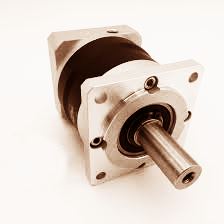
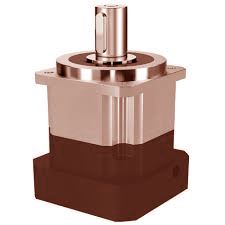
Precision planetary gearbox for servo motor with helical gearing and output flange
Precision planetary gearbox with helical gearing and output flange.

Technical Parameters by Series

SPECIFICATIONS

The table below sets out the three series side by side. Frame size, ratio, backlash grade, output shaft diameter and efficiency differ between them, so the first step in selection is deciding which series fits the torque and the mounting envelope before looking at individual ratios.

Series comparison. Scroll the table sideways on a mobile device to read every column.

Series Stage Frame sizes Ratio Rated torque Output flange dia. Output shaft dia. Backlash Efficiency
PAB (inline) 1 PAB042, 060, 090, 115, 142, 180, 220 3, 4, 5, 6, 7, 8, 9, 10 14–2000 N·m 42–220 mm Φ13, Φ16, Φ22, Φ32, Φ40, Φ55, Φ75 ≤1, ≤3, ≤5 arcmin ≥97 %
PAB (inline) 2 PAB042, 060, 060A, 090, 090A, 115, 142, 180, 220 15, 20, 25, 30, 35, 40, 45, 50, 60, 70, 80, 90, 100 14–2000 N·m 42–220 mm Φ13, Φ16, Φ22, Φ32, Φ40, Φ55, Φ75 ≤3, ≤5, ≤7 arcmin ≥94 %
PABR (right angle) 1 PABR042, 060, 090, 115, 142, 180, 220 3, 4, 5, 6, 7, 8, 9, 10, 14, 20 9–2000 N·m 42–220 mm Φ13, Φ16, Φ22, Φ32, Φ40, Φ55, Φ75 ≤2, ≤4, ≤6 arcmin ≥95 %
PABR (right angle) 2 PABR042, 060, 090, 115, 142, 180, 220 15, 20, 25, 30, 35, 40, 45, 50, 60, 70, 80, 90, 100, 120, 140, 160, 180, 200 14–2000 N·m 42–220 mm Φ13, Φ16, Φ22, Φ32, Φ40, Φ55, Φ75 ≤4, ≤7, ≤9 arcmin ≥92 %
PPG (inline) 1 PPG040, 060, 080, 080A, 120, 120A, 160 3, 4, 5, 7, 10 9–423 N·m — Φ10, Φ14, Φ20, Φ25, Φ40 ≤6, ≤8 arcmin ≥97 %
PPG (inline) 2 PPG040, 060, 080, 080A, 120, 120A, 160 15, 16, 20, 25, 30, 35, 40, 50, 70, 100 9–423 N·m — Φ10, Φ14, Φ20, Φ25, Φ40 ≤8, ≤10 arcmin ≥94 %

Ratio options and special cases

One-stage ratios
3, 4, 5, 6, 7, 8, 9, 10 — plus 14 and 20 on the PABR right-angle series, which are achieved by the bevel input stage.
Two-stage ratios
15, 20, 25, 30, 35, 40, 45, 50, 60, 70, 80, 90, 100 as standard; the PABR right-angle series extends to 120, 140, 160, 180 and 200.
PPG ratio variation
The PPG series uses a different gear set and offers 3, 4, 5, 7, 10 in one stage and 15, 16, 20, 25, 30, 35, 40, 50, 70, 100 in two stages.
Frame size note
The 060A, 090A, 080A and 120A suffixes denote a variant frame within the same nominal size — normally a different output flange or shaft arrangement. Confirm the A-suffix dimensions against the drawing if the mounting interface is fixed by an existing design.
Ratio availability note
Ratio 15 and 20 in two stages are offered only on the AFR042 frame. Confirm availability for the specific frame size and ratio combination before ordering.

Data conflicts to resolve before publication: three figures differ between the source body text and the source parameter table. (1) Backlash: the body text states ≤2/≤4/≤6 arcmin for one stage and ≤4/≤7/≤9 for two stages, while the table states ≤1/≤3/≤5 and ≤3/≤5/≤7 for the PAB series. (2) Efficiency: the body text gives ≥95 % one-stage and ≥92 % two-stage as blanket figures, while the table gives ≥97 % and ≥94 % for PAB and PPG and ≥95 % and ≥92 % for PABR. (3) Torque: the body text states 9–2000 N·m, while the table gives 14–2000 N·m for PAB and PABR and 9–423 N·m for PPG. Backlash and torque are the two figures a servo application is selected on, so the table above follows the parameter table throughout and the body text values should be deleted rather than reconciled by guesswork.

Construction, Materials and Motor Interface

BUILD

Every component in a precision reducer has to hold its geometry under load, because backlash is measured at the output and any deflection anywhere in the train appears as lost motion. The materials and treatments below are what keep that loss within the stated tolerance.

Housing and flange

Aluminium alloy die casting, ADC12. ADC12 is a die-cast aluminium-silicon alloy chosen for dimensional stability and stiffness at low weight. The housing carries the output bearing bores, so its rigidity directly affects how much the output shaft deflects under an overhung load.

Ring gear

40Cr chromium alloy steel. The ring gear is the internal-tooth member that all planet gears react against. 40Cr is through-hardened and tempered for a combination of core toughness and surface wear resistance, and the internal teeth are finish-machined after heat treatment to hold the tooth spacing that backlash depends on.

Planet gears

20CrMnTi, case-hardened to HRC 58–62 at the surface with an HRC 33–40 core. This is the classic carburising steel combination: a very hard, wear-resistant surface layer over a tough core. The hard case resists pitting at the tooth flank, while the softer core absorbs shock loading without cracking.

Output bearings

High-precision taper roller bearings. Taper rollers take combined radial and axial load, which is what an output shaft carrying a timing pulley, a pinion or a chain sprocket actually imposes. They also set the output shaft's axial location, so their preload affects backlash.

Input configuration

Keyed hollow shaft with motor adaptor. The motor shaft enters a clamping or keyed hollow input, and the adaptor flange is machined to the motor's mounting pattern. This is what makes the gearbox compatible with standard servo and stepper motors rather than tied to one brand.

Output configuration

Keyed solid shaft or keyless solid shaft. The keyed version suits a pulley or sprocket retained on a key; the keyless version uses a clamping arrangement where a keyway would weaken the shaft or introduce unbalance at speed. Both are available across the PAB and PABR frame sizes.

Applicable motors: servo motors and stepper motors. Because the input flange is machined to the motor mounting pattern and the hollow input matches the motor shaft diameter, the gearbox is specified together with the motor rather than independently. Send the motor brand, frame size, shaft diameter and flange drawing when enquiring, and confirm the clamping arrangement matches the shaft — a smooth shaft and a keyed shaft need different input hardware.
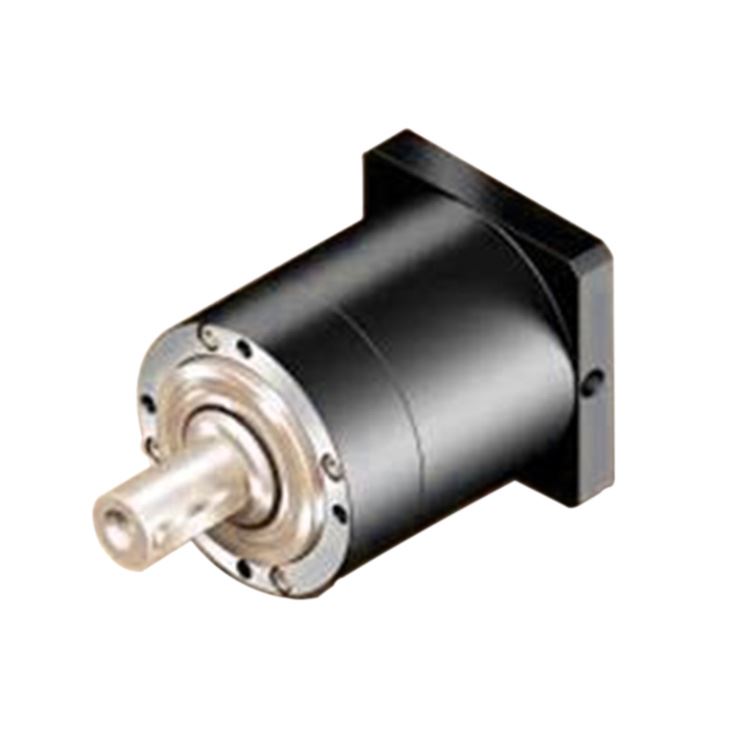
Precision planetary gearbox internal construction showing ring gear and planet carrier
Internal construction — ring gear and planet carrier.
Planetary gearbox output shaft and flange arrangement with taper roller bearing
Output shaft, flange and bearing arrangement.

Selecting a Precision Planetary Gearbox

SELECTION

Selection runs in a fixed order, because each step constrains the next. Doing it in the wrong order is how a gearbox ends up either oversized and expensive or undersized and short-lived.

1. Backlash grade This is the first decision on a precision reducer, not the last. Work out the positioning accuracy the axis actually needs, convert it to an allowable lost motion at the output, and pick the backlash grade from there. Three grades are available: an ultra-precision grade at ≤1 arcmin one-stage, a high-precision grade at ≤3 arcmin, and a standard grade at ≤5 arcmin. Buying a tighter grade than the application needs is the most common way to overspend on a servo axis.
2. Rated torque and service factor Take the continuous torque the load requires at the output, then apply a service factor for the duty: a uniform load, a shock load and a reversing load each need a different factor. Compare against the rated torque for the frame size and ratio, not against the peak or emergency torque.
3. Ratio and stage count Fix the ratio from the required output speed. Then decide whether it can be met in one stage or needs two. One stage is more efficient and has lower backlash for the same grade, but is limited to 3:1 to 10:1 on PAB and up to 20:1 on PABR. Two stages extend the range to 100:1 on PAB and PPG and 200:1 on PABR at the cost of efficiency and a wider backlash tolerance.
4. Inline or right angle An inline gearbox is shorter along the axis and slightly more efficient. A right-angle gearbox turns the motor through 90 degrees, which matters when the machine envelope will not accept a motor projecting straight out from the driven axis, or when the motor would obstruct access. PABR also reaches higher ratios in one stage, up to 20:1, than the inline PAB.
5. Loads on the output shaft Radial load from a pulley or pinion and axial load from a helical or bevel output both have permissible limits for each frame size. The taper roller bearings are what allow these loads to be carried, but they are still limited. Overhung load is the single most common cause of premature output bearing failure, and it is usually a result of a pulley mounted too far out along the shaft.
6. Motor interface Confirm the motor shaft diameter, key or smooth shaft, flange dimensions and bolt pattern against the gearbox input. This determines the adaptor plate and the input clamping arrangement, and it is the step most often left until after the gearbox has been selected.

The low backlash planetary gearbox page covers the tighter grades in more detail, and the single stage planetary gearbox page explains when a one-stage unit is preferable to a two-stage one.

Installation, Running-In and Maintenance

OPERATION

A precision gearbox is delivered with its backlash set at the factory. Almost everything that destroys that setting happens at installation or in the first few hours of running, so the commissioning steps matter more than the maintenance interval.

Motor mounting Clean the motor shaft and the hollow input before assembly, and check the shaft enters without forcing. A motor shaft that has to be drawn in with the clamping screw is misaligned or oversize, and forcing it preloads the input bearing and changes the backlash.
Clamping screw torque Tighten the input clamping screw to the specified torque with a torque wrench. Under-tightening allows the input to slip under reversing load; over-tightening distorts the hollow shaft and loads the bearing. Both show up as a backlash change that cannot be corrected afterwards.
Output connection Mount the pulley, pinion or coupling as close to the gearbox face as the design allows. Every millimetre of overhang multiplies the radial load on the output bearing pair. Use the correct fit on the shaft and key, and do not hammer a component onto the output shaft.
Running-in Run the axis at reduced speed and load for the first hours rather than immediately at full duty. This distributes the initial contact pattern across the tooth flanks and stabilises the backlash at its working value. Check the backlash again after running in — a small change is normal, a large one indicates a mounting problem.
Lubrication These units are grease-lubricated and sealed for life in most frame sizes, so there is no oil change interval. Confirm the lubrication arrangement for your frame size and duty, because units intended for continuous high-speed running may specify a different regime from standard units.
Temperature and noise Monitor housing temperature and running noise during the first weeks. A rising temperature trend or a change in noise character under the same load usually indicates bearing preload loss or inadequate lubrication rather than a gear problem, and it is best caught early.
Backlash re-check Measure backlash at the output after running in and record the figure. That baseline is what tells you later whether wear is progressing normally. Measuring it for the first time after a fault has appeared leaves no reference to compare against.

Applications

USE CASES

Precision planetary gearboxes are specified wherever an axis has to move to a position and hold it, rather than simply transmit power. The common duties are as follows.

CNC machine tools
Tool changers, rotary tables and gantry axes, where backlash at the output appears directly as a positioning error and a poor surface finish.
Industrial robotics
Joint axes and end-effector positioning, where repeatability matters more than absolute accuracy and the gearbox must take the overhung load of the arm.
Servo packaging machinery
Indexing, filling, sealing and cut-off stations running from a servo axis with frequent reversals.
Printing and converting
Register control and web tension axes, where backlash shows as print misregistration that no amount of control tuning will remove.
Automated storage and handling
Stacker cranes, shuttles and gantry loaders, where the gearbox is mounted on a moving structure and weight and length both matter.
Medical and laboratory equipment
Sample handling and imaging stages needing smooth low-speed motion with no lost motion on reversal.
Semiconductor and electronics assembly
Pick-and-place and wafer handling axes, where the lowest backlash grades are normally specified.
Feed mixers and agricultural drives
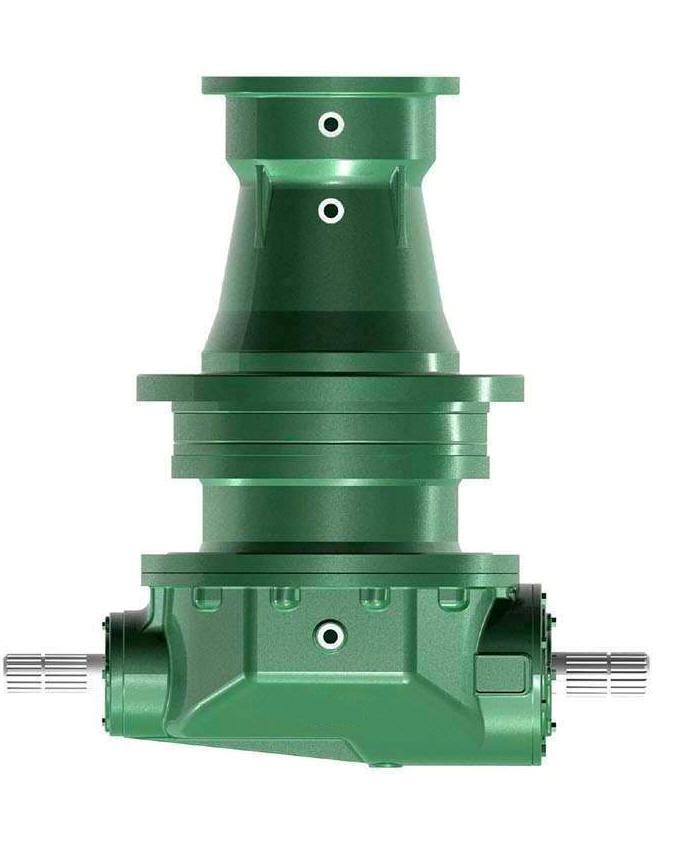
Heavier planetary units in the range such as the planetary gearbox for feed mixers, where torque capacity dominates over backlash.

The same range serves two very different requirements. A servo axis needs the tightest backlash grade the machine can justify, while an agricultural drive such as a feed mixer or a rotary tiller needs torque capacity and durability and is indifferent to a few arcminutes of lost motion. Specify which requirement dominates when enquiring, because the two lead to different series and different frame sizes within this range.

Buyer FAQ

FAQ
  • What backlash grades are available, and which should I choose?Three grades are offered: ultra-precision, high-precision and standard. On the PAB inline series this corresponds to ≤1, ≤3 and ≤5 arcmin in one stage and ≤3, ≤5 and ≤7 arcmin in two stages; the right-angle PABR series is one grade wider throughout. Choose the widest grade the positioning accuracy of your axis can tolerate, because tightening backlash is the most direct way to increase cost on a servo axis.
  • What is the difference between the PAB, PABR and PPG series?PAB is the inline high-precision range with the widest torque coverage. PABR is the same gearbox with a helical bevel input stage that turns the drive through 90 degrees, useful where a motor cannot project directly along the driven axis, and it reaches higher one-stage ratios up to 20:1. PPG is a lighter inline range with lower torque capacity, suited to axes below roughly 420 N·m.
  • Can the gearbox be supplied to match my servo motor?Yes. The input is a keyed hollow shaft with a motor adaptor flange machined to the motor mounting pattern, and both servo and stepper motors are supported. Send the motor brand, frame size, shaft diameter and flange drawing so the adaptor and clamping arrangement can be confirmed.
  • Is one stage or two stages better?One stage is more efficient and holds a tighter backlash for the same grade, but is limited to ratios of 3:1 to 10:1 on PAB and up to 20:1 on PABR. Two stages extend the ratio to 100:1 on PAB and PPG and 200:1 on PABR, at the cost of about three percentage points of efficiency and a wider backlash tolerance. Use one stage wherever the ratio allows.
  • What loads can the output shaft carry?Radial and axial loads are carried by high-precision taper roller bearings, which are the reason this range can accept an overhung pulley or pinion. The permissible load depends on frame size and on how far out along the shaft the load is applied, so supply the radial load, the axial load and the distance from the gearbox face, and we will confirm the frame size.
  • What is the warranty and what certification applies?Confirm these with the sales team for the specific series and frame size. Warranty terms and certification are supplied with the quotation, and certificates are available on request.

Related Products and Further Reading

RELATED

Send Your Axis Data for a Sized Quotation

Send the required output speed and torque, the positioning accuracy you need so the backlash grade can be fixed, the motor brand, frame size and shaft diameter, and whether the mounting allows an inline or requires a right-angle unit. We will confirm the series, frame size, ratio and backlash grade, and reply with a quotation.

Request a Quotation

* Parameter values are taken from the series parameter table. Where the source body text quoted different backlash, efficiency or torque figures from the parameter table, the table values have been used and the discrepancy is flagged above for confirmation. Confirm frame size, ratio availability and backlash grade against the current catalogue before designing around them.

Send Inquiry
Contact Info
Ready to start a project? 

The Send Inquiry page is your direct line to our technical and sales team. Whether you need a quote for a standard product, have questions about specifications, or want to discuss a custom OEM/ODM project for non-standard parts, we are here to help. We pride ourselves on providing prompt, professional responses and competitive pricing tailored to your needs.
X
We use cookies to offer you a better browsing experience, analyze site traffic and personalize content. By using this site, you agree to our use of cookies. Privacy Policy
RejectAccept